

Walk into almost any thoughtfully designed home, from a rustic country cottage to a sleek city apartment, and you’ll probably spot the classic 4 panel interior door. This timeless design isn’t just a way to close off a room; it brings a sense of balanced, symmetrical order that elevates any space. It’s a true chameleon of interior design, effortlessly adapting to countless styles.
The Timeless Appeal of 4 Panel Doors
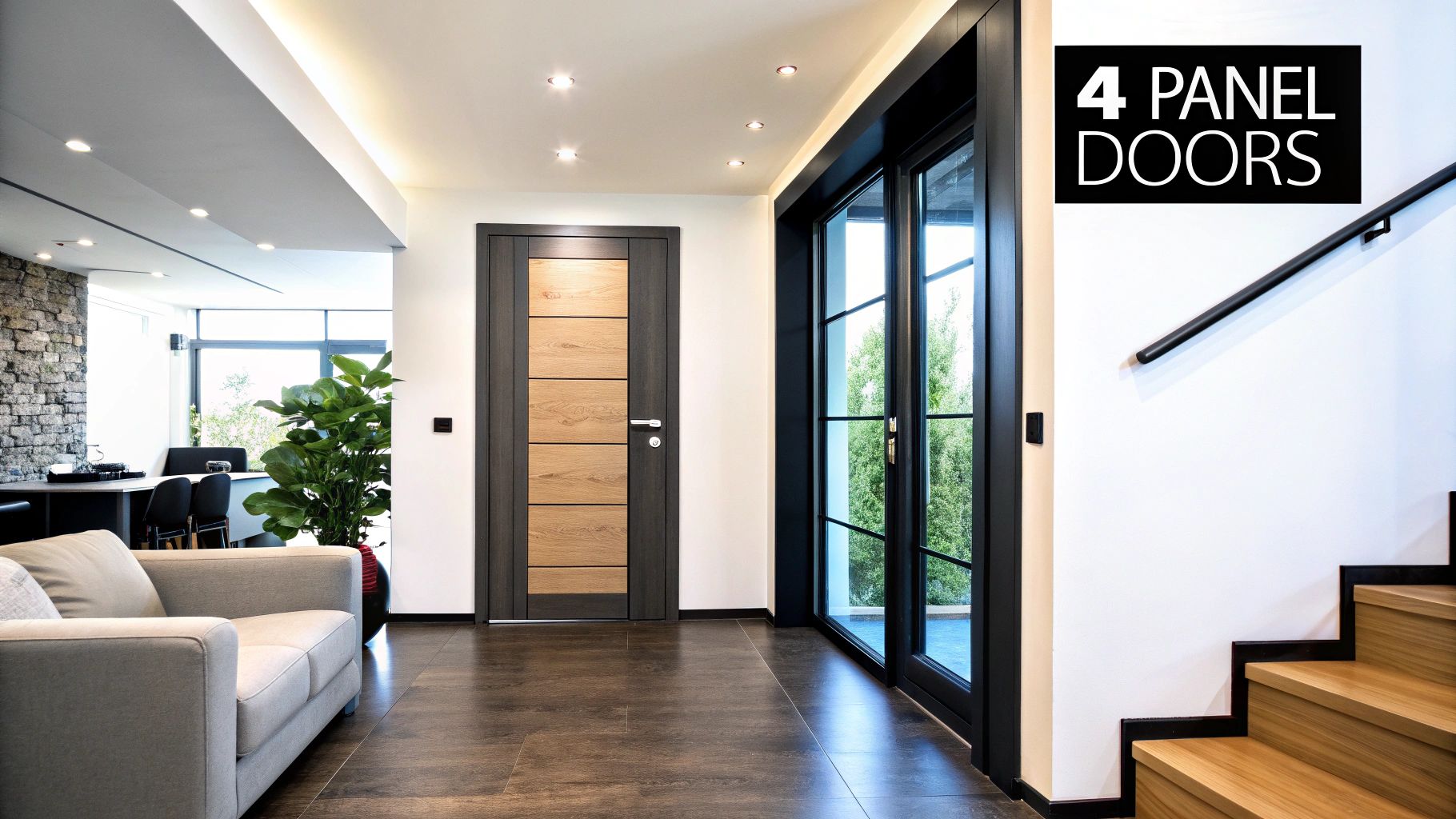
Think of the 4 panel door as the perfect little black dress of architecture—it’s classic, versatile, and somehow always in style. Its enduring popularity is no happy accident. It all comes down to a simple yet sophisticated structure that complements a huge range of architectural themes without ever looking dated. Whether your home is a brand-new build or a period property, this door style just feels right.
This widespread appreciation is definitely reflected in market trends. The UK’s interior door market was valued at a hefty USD 2.41 billion in 2023 and is still showing steady growth. While it’s hard to isolate figures just for the 4 panel style, wooden doors as a category—which includes this classic design—remain a top choice for UK homeowners. This demand is really being fuelled by home improvement trends and a buzzing construction sector. You can dig deeper into the UK door market insights on techsciresearch.com.
Before we dive deeper, let’s quickly summarise what makes these doors such a reliable choice for any home.
Quick Look at 4 Panel Interior Door Attributes
| Attribute | Description |
|---|---|
| Balanced Aesthetics | The four-panel layout creates a harmonious, symmetrical look that is pleasing to the eye. |
| Visual Depth | Recessed panels add texture and shadow, offering more character than a flat, flush door. |
| Style Versatility | It effortlessly complements a wide array of interior styles, from traditional to contemporary. |
| Enduring Popularity | A classic design that has remained a homeowner favourite for generations, ensuring it won’t look dated. |
As you can see, the combination of classic design and adaptability is what really gives the 4 panel door its staying power in British homes.
Why This Design Endures
So, what’s the secret to its longevity? It’s all in the balanced geometry. Those four recessed panels create a subtle visual interest, adding a lovely depth and shadow that a plain flush door simply can’t match. This structure breaks up what would otherwise be a flat, uninspired surface, turning a purely functional object into a genuine architectural feature.
It manages all this without being fussy or overly decorative, striking that perfect balance which allows it to blend into almost any design scheme you can think of. It’s this inherent versatility that makes it such a go-to for homeowners and interior designers alike.
The real beauty of the 4 panel door is its ability to give structure and character to a space without demanding all the attention. It supports the overall design rather than dominating it, making it a true foundation of classic British interiors.
This adaptability ensures that even as trends come and go, the 4 panel door remains a trusted staple for anyone looking for that blend of enduring quality and style. Its simple elegance is a fantastic reminder that truly great design doesn’t need to be complicated.
Discovering Different 4 Panel Door Styles
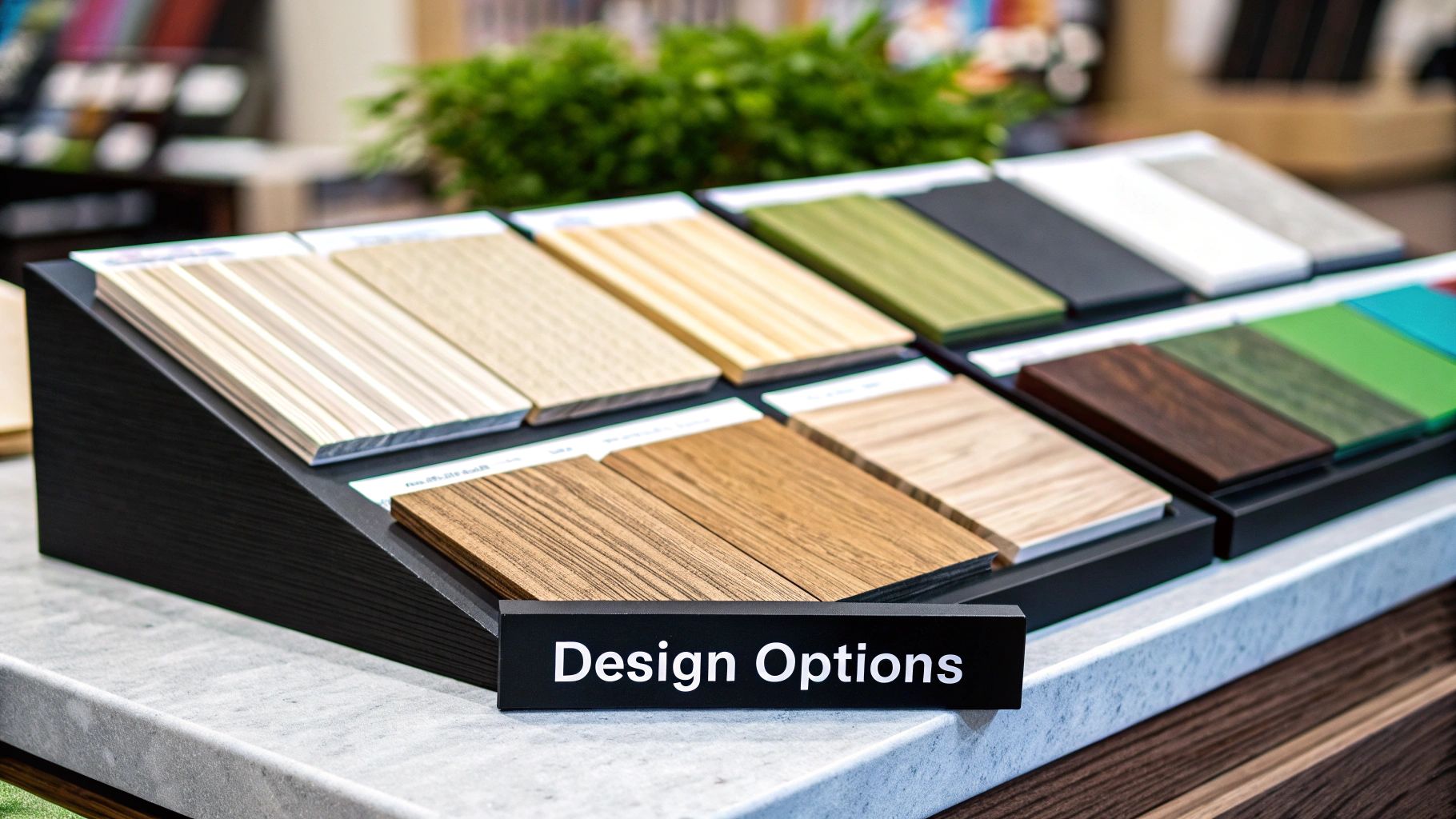
When you hear “4 panel door,” you might picture one specific design, but the reality is much more exciting. Think of it less as a single item and more as a family of doors, each with its own distinct personality. It’s like a classic suit—the basic template is there, but the cut, fabric, and details can make it feel sharp and modern or timeless and traditional. The same goes for a 4 panel door interior; small tweaks in style can completely transform the feel of a room.
The most popular layout you’ll see has two smaller, squarish panels up top with two taller, rectangular panels below. This is a design classic for a reason. It creates a wonderful sense of height and proportion, making it a safe yet stylish bet for almost any home. But that’s not the only option. Some designs switch things up with four equal-sized panels, which gives the door a more symmetrical, contemporary edge.
Once you start noticing these details, you’re no longer just picking out a door. You’re making a conscious design choice that complements your home’s character. It’s about seeing the door as a key part of your interior, not just something to walk through.
The Clean Lines of Shaker Style
If your home has a modern, minimalist, or even a Scandi vibe, then a Shaker style 4 panel door is a fantastic match. Simplicity is its superpower. Shaker doors are all about flat, recessed panels framed by plain, squared-off stiles and rails (the vertical and horizontal bits). You won’t find any fussy mouldings or fancy details here.
This clean, understated approach results in sharp lines that are both beautiful and functional. It’s a style that celebrates solid craftsmanship over fussy ornamentation, giving you a door that feels honest, sturdy, and effortlessly timeless. It’s the perfect, uncluttered backdrop for a contemporary space.
The Decorative Flair of Traditional Styles
On the other end of the spectrum, 4 panel doors designed for period homes—like Victorian or Edwardian properties—love a bit of decorative flair. These styles often feature raised panels that are flush with or even stand slightly proud of the frame, giving them a more substantial, three-dimensional presence.
You’ll also notice that the edges around the panels and frame are finished with lovely, intricate beading or moulding. This detail, sometimes called “sticking,” is designed to catch the light and create subtle shadows, giving the door a rich, historic feel.
A key difference lies in the panel profile. Traditional doors use ornate mouldings to create depth and shadow, while modern Shaker doors use flat panels and sharp angles to achieve a clean, minimalist look. This single detail can completely transform the door’s personality.
These decorative touches are meant to harmonise with the grand architraves, deep skirting boards, and ceiling roses you often find in older homes. Opting for a traditionally styled 4 panel door is a brilliant way to honour your property’s heritage and pull your whole interior scheme together.
Choosing the Best Material for Your Doors
Picking the right material for your 4 panel interior door is a decision that shapes the very feel of your home. It’s about so much more than just looks. Think of it like choosing a coat: the material defines the door’s weight, how well it blocks sound, its lifespan, and the sense of quality it brings to a room.
You need to match the door to its job. A beautiful solid wood door is like a premium wool overcoat—it’s classic, substantial, and makes a real statement. A solid core door is your trusty all-weather jacket, practical and reliable for almost any situation. And a hollow core door? That’s your lightweight windbreaker, perfect for places where you just need a simple, no-fuss barrier.
This choice really does affect your day-to-day life. The right material can be the difference between a peaceful, quiet home office and one where you hear every footstep in the hallway.
Solid Wood: The Premium Choice
When it comes to pure, authentic beauty, nothing quite matches a solid wood door. Made from a single piece of timber or several pieces bonded together, woods like oak and pine offer a rich, tactile experience. The natural grain means no two doors are ever identical, giving your space a truly unique character.
Solid wood is a fantastic sound insulator and has that satisfying, hefty feel that just whispers quality. Of course, this premium quality comes with a higher price tag and a bit more upkeep. Wood can expand and contract with changes in temperature and humidity, which is something to bear in mind for rooms like kitchens or bathrooms. For a deeper dive into what makes a good installation, take a look at our insights on the importance of quality door frames and structure.
Solid Core: The Practical All-Rounder
Solid core doors strike a brilliant balance between performance and price, making them a fantastic middle-ground option. They’re built with a core of composite wood or particleboard, which is then wrapped in a veneer or a moulded finish. This construction makes them incredibly stable and much less likely to warp than solid wood.
A solid core door is often the smartest investment for bedrooms, home offices, or living rooms—anywhere you want to dial down the noise. It gives you much of the weighty feel and acoustic benefit of solid wood, but with better stability and a more accessible price.
They feel much heavier and more durable than their hollow counterparts, providing excellent soundproofing that helps you create quiet, private zones in your home. It’s this all-round performance that makes them such a popular choice for most interior spaces.
The chart below gives you a clear picture of how different door materials stack up in terms of cost and durability, helping you see the long-term value in your choice.
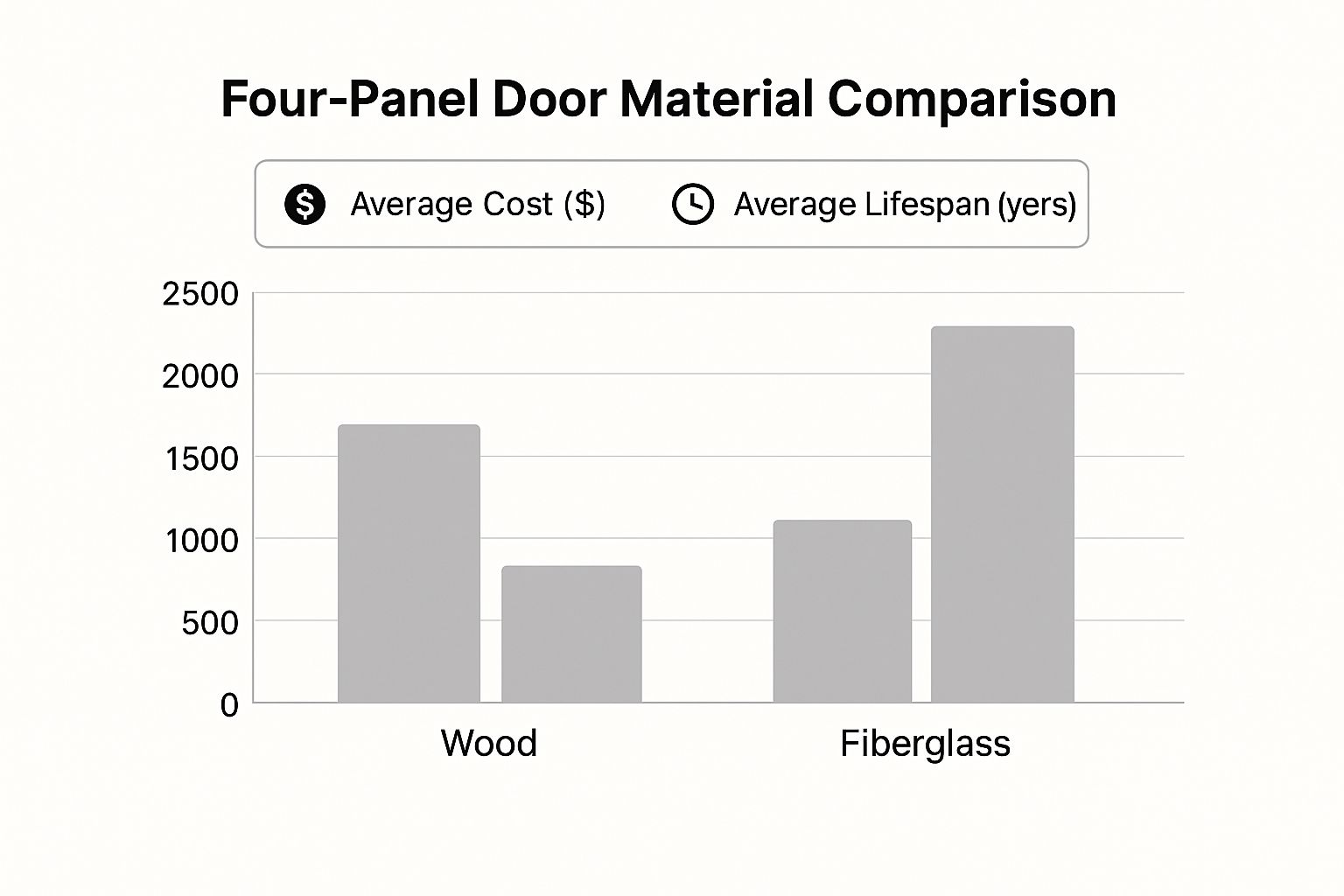
As you can see, while the initial cost might vary, the more durable materials can offer better value over the long run.
Hollow Core: The Budget-Friendly Option
Lightweight and affordable, hollow core doors are the go-to choice when the budget is tight. They’re made with a simple wooden frame around a honeycomb-style cardboard core, all wrapped in a thin skin of hardboard or veneer.
Their biggest pluses are their low price and how easy they are to hang, which makes them a great fit for areas where cost is the main driver and you’re not too worried about noise.
- Best Use Cases: Brilliant for wardrobes, pantries, and cupboards.
- Limitations: They don’t offer much in the way of sound insulation and can be damaged more easily than solid or solid core doors.
Comparing 4 Panel Door Core Materials
To help you decide, here’s a straightforward comparison of the three main material types. Think about where the door is going and what you need from it most.
| Material Type | Best For | Pros | Cons | Average Cost |
|---|---|---|---|---|
| Solid Wood | High-traffic areas, main living spaces, and anywhere you want a premium feel. | Authentic beauty, excellent soundproofing, feels substantial and high-quality. | Higher cost, can warp with humidity changes, requires more maintenance. | £££ (High) |
| Solid Core | Bedrooms, home offices, and living rooms where sound reduction is important. | Great sound insulation, feels solid, more stable than wood, good value. | Heavier than hollow core, not as authentic as solid wood. | ££ (Medium) |
| Hollow Core | Low-traffic areas like wardrobes, cupboards, and pantries where cost is key. | Very affordable, lightweight, and easy to install. | Poor sound insulation, easily damaged, feels less substantial. | £ (Low) |
Ultimately, choosing between solid wood, solid core, and hollow core comes down to balancing your budget with your desire for quality, quiet, and durability. Each has its place in the modern home.
The trend towards high-quality materials is clear. The global market for wooden interior doors is set to grow from USD 16.41 billion in 2024 to USD 22.74 billion by 2029. The UK market is right there with it, showing a strong demand for sustainable, premium wood products—a category where the classic 4-panel door fits perfectly. You can discover more insights about wooden door market trends if you’d like to explore the data further.
Selecting Finishes and Hardware
An unadorned door is really just a starting point. It’s the finish and hardware that truly give it character and help it blend into your home’s unique story. Choosing these final touches for your 4 panel door interior is where you can let your creativity shine, turning a simple functional object into a standout design feature. Think of it as dressing the door for the part you want it to play in your home.
The first big decision is the finish: paint or stain? A coat of paint opens up a world of possibilities. You could go for a crisp, clean white to brighten up a dark hallway, or maybe a bold, dramatic dark grey or navy to create a sophisticated focal point. Painting is a fantastic way to introduce a splash of colour and nail that modern, seamless look.
On the other hand, a wood stain is all about celebrating the natural material itself. If you’ve gone for a beautiful oak or pine door, staining it will enhance the unique grain and warm tones, bringing an organic, timeless quality to your space. It’s the perfect choice for creating a rustic, traditional, or cosy atmosphere.
Choosing Your Paint Sheen
If you do decide to paint, the sheen—or the level of gloss—is just as important as the colour. It doesn’t just affect the final look; it also impacts the door’s durability and how easy it is to clean, which is a key thing to consider for something you’ll be touching every day.
- Matte or Eggshell: These low-sheen finishes have a soft, contemporary feel and are brilliant at hiding minor scuffs and imperfections. They’re great for low-traffic areas but can be a bit more of a challenge to clean.
- Satin or Semi-Gloss: This is by far the most popular choice for interior doors, and for good reason. It offers a subtle lustre that’s durable and easy to wipe down, making it perfect for busy family homes, kitchens, and bathrooms.
- High-Gloss: A high-gloss finish makes a bold, dramatic statement with its reflective, almost lacquer-like shine. While it’s incredibly durable and a breeze to clean, it will highlight every tiny flaw, so you need a perfectly prepared surface to pull it off.
Selecting the Perfect Door Furniture
Hardware is often called ‘door furniture’, and it’s a fitting term. It’s the final accessory that completes the look. The right handle, knob, or latch is like the perfect piece of jewellery for an outfit; it has the power to elevate the entire aesthetic.
The hardware you choose is a powerful detail. A sleek, matte black lever handle can instantly give a traditional 4 panel door a modern twist, while a polished brass knob will reinforce its classic heritage. Don’t underestimate this final touch.
When you’re picking out hardware, think about both the style and the finish. For a contemporary feel, look for clean lines in finishes like matte black, satin nickel, or brushed chrome. If you’re aiming for a more traditional or period-appropriate look, polished brass, antique bronze, and pewter are all excellent choices. To get a better sense of how different styles can work, exploring a gallery of various door handles and knobs can provide some brilliant inspiration.
How to Measure and Install Your New Door
There’s something incredibly satisfying about fitting a new 4 panel interior door yourself. When you get it right, it swings open and shut with that smooth, silent action that just feels like quality. While it definitely takes a bit of patience and a precise touch, getting the measurements right from the start is the absolute foundation of a successful job.
An accurately measured door is what separates a professional finish from a frustrating, ill-fitting mess. It’s a common mistake to assume every door frame is perfectly square—especially in older houses where things have had decades to settle and shift. This is where a good tape measure and a spirit level become your best friends. A few careful measurements now will save you a world of headaches down the line.
Taking Accurate Measurements
Before you even think about buying that new door, you need to meticulously measure the opening—not the old door itself. This ensures your new door is sized for the frame it’s actually going into.
- Measure the Width: Take your tape measure and check the width of the door opening in three different spots: top, middle, and bottom. Jot down the smallest of these three numbers. This is the absolute maximum width your new door can be.
- Measure the Height: Do the same for the height. Measure from the floor to the top of the frame on both the left and right sides. Again, write down the smaller of the two measurements.
- Check the Depth: Now, measure the depth of the door jamb (the frame). This tells you how thick your door needs to be. For most internal doors in the UK, this is typically either 35mm or 40mm.
- Check for Square: Use a builder’s square in the corners, or for a really thorough check, measure diagonally from the top-left corner to the bottom-right, and then from the top-right to the bottom-left. If the two numbers are the same, congratulations—your frame is square! If they’re off by a fair bit, you’ll need to account for this when hanging the door.
A critical pro tip: always allow for an expansion gap. You’re aiming for a 2-3mm gap around the top and sides of the door. The gap at the bottom can be a little larger. This tiny bit of wiggle room is vital, as it allows the door to expand and contract with changes in humidity through the seasons, preventing it from sticking.
The Installation Process
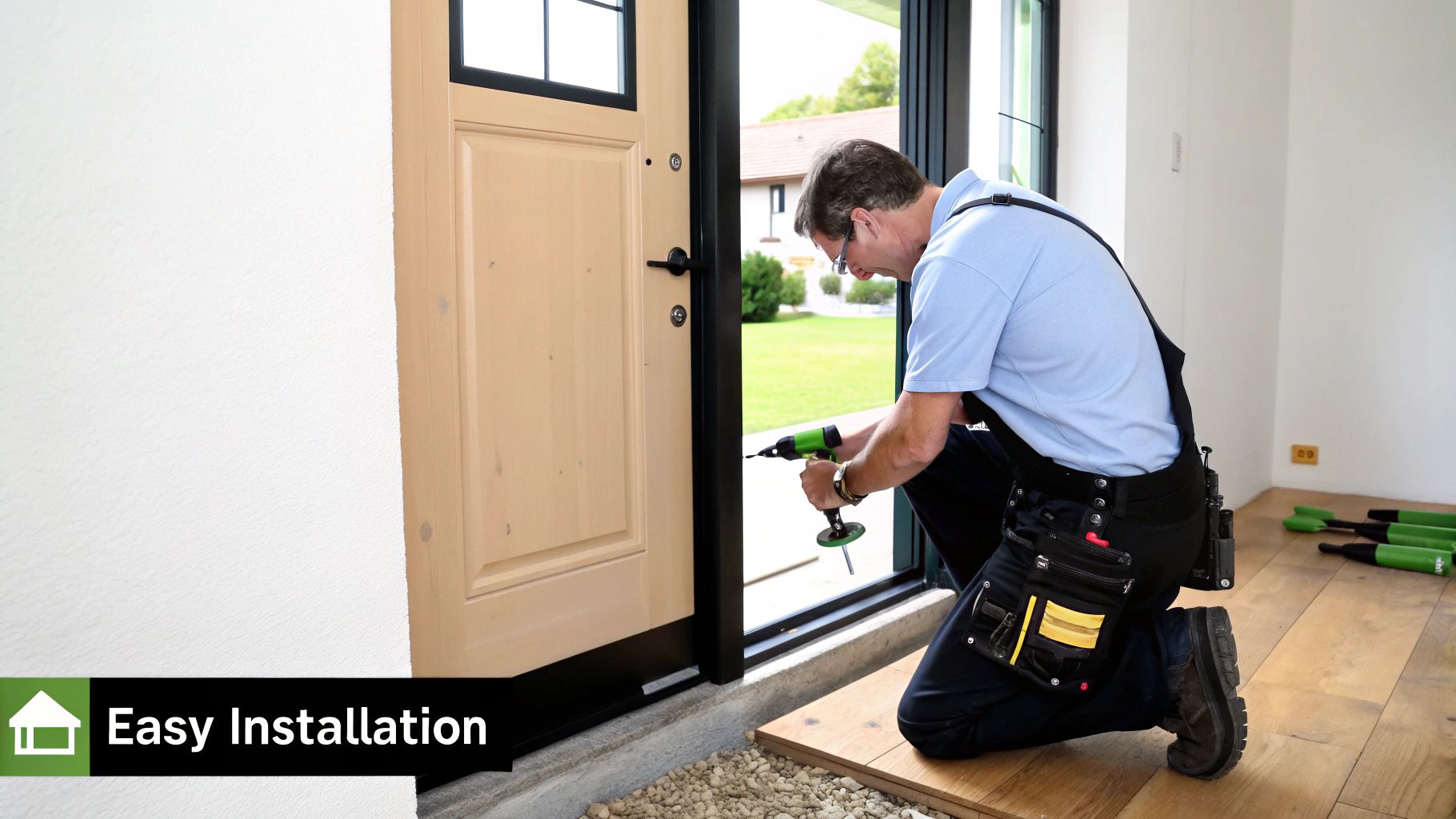
Once you’ve got your new door, the real fun begins. If your measurements weren’t perfectly standard, you’ll likely need to trim the door to size. Use a hand plane or a circular saw with a guide rail for a perfectly straight cut. Always trim a little bit at a time from both sides to keep the panel design centred and balanced.
Next up is chiselling out the recesses for the hinges, known as mortises. Mark their position carefully on both the door edge and the frame, then gently chisel out the wood to the exact depth of the hinge plate. For a great visual on what a solid frame should look like, you can see a proper door lining here.
Finally, you’ll attach the hinges, hang the door, and fit the latch and handle. While this is a manageable project for a confident DIYer, it does demand a steady hand—especially with the chisel work. If you feel even slightly unsure, it’s always better to call in a professional carpenter. They’ll get that flawless finish every time.
Interestingly, it’s a great time to be buying doors. The UK market has become far more competitive, meaning more choice for homeowners. A market concentration metric, the Herfindahl-Hirschman Index (HHI), dropped from 1881 in 2017 to just 1351 in 2023, which points to a healthier, more diverse marketplace. This competition drives innovation in materials and design, even for timeless styles like the 4-panel door. You can read more on UK door market competitiveness to see how these trends are benefiting consumers.
Of course. Here is the rewritten section, crafted to sound like an experienced human expert and match the provided examples.
Common Questions About 4-Panel Doors
Even with a design as popular and long-standing as the 4-panel door, a few questions always come up. As someone who’s seen countless homeowners weigh their options, I know it’s essential to get clear, straightforward answers before you commit. People often worry about whether the style is outdated or what the real-world cost will be.
Let’s clear the air. We’ll tackle these common queries head-on, so you can move forward with total confidence in your choice.
Are 4-Panel Doors Considered Old-Fashioned?
This is probably the biggest myth I hear, and the answer is a resounding no. It’s true that the 4-panel door has a rich history and is a go-to for period properties, but calling it “old-fashioned” is like calling a classic blue jean outdated. Its real strength is its incredible adaptability.
Think of the four-panel layout as a beautifully balanced, neutral canvas. The final look is all in the styling.
- For a Modern Look: Imagine a Shaker-style door with flat panels and crisp, clean lines. Paint it a sharp, contemporary dark grey or brilliant white, then add some sleek, minimalist hardware in matte black. Suddenly, it feels perfectly at home in a modern or Scandinavian space.
- For a Traditional Feel: Now picture the same door, but with raised, moulded panels. A warm wood stain or a classic heritage paint colour, paired with polished brass handles, will beautifully enhance a traditional home’s character.
Because it can be so easily transformed, the 4-panel door doesn’t just follow trends—it transcends them. It’s not old-fashioned; it’s timeless.
How Much Does It Cost to Replace an Interior Door in the UK?
The cost to replace an interior door can swing quite a bit, but we can definitely pin down a realistic range. The final price tag really hinges on three things: the door’s material, the hardware you pick, and whether you hire a pro to fit it.
As a rule of thumb, a realistic budget for replacing a standard interior door in the UK—including the door, hardware, and professional fitting—is typically between £250 and £500. This can climb higher for premium solid wood doors or more complex jobs.
Let’s break that down:
- The Door Itself: A basic hollow core 4-panel door can start as low as £40-£60. For something more substantial, a solid core door will likely be in the £80-£150 range. If you’re looking at premium solid oak, you could be spending £200 or more.
- Hardware: A simple set of handles might only be £15-£25, but more stylish, high-quality options can easily run £40-£70. Don’t forget hinges and a latch, which will add another £10-£20 to the total.
- Labour Costs: Getting a carpenter or joiner to hang a single door will generally cost between £100 and £200. This price usually covers trimming the door to size, cutting in the hinges, and fitting the handle and latch. Your location and the specifics of the job will cause this to vary.
What Is the Difference Between a 4-Panel and 6-Panel Door?
On the surface, it’s simple—just two extra panels, right? But in my experience, that small change makes a big difference to a door’s visual impact and the type of home it suits best.
A 4-panel door, particularly the popular style with two smaller panels over two larger ones, has a knack for creating a sense of height and elegant simplicity. Its balanced, uncluttered design feels open and adaptable, which is precisely why it works so well in both modern and traditional homes.
In contrast, a 6-panel door immediately gives off a more traditional, almost Colonial or Georgian vibe. The smaller, more frequent panels create a busier, more detailed surface. This can add a fantastic sense of character and substance to a period property, but it might feel a bit too fussy or visually heavy in a minimalist, contemporary space. Ultimately, the choice often comes down to your home’s architecture and how much detail you want to introduce.
At Doors Delivered, we believe the right door is the foundation of a great space. Explore our extensive collection of high-quality 4 panel interior doors and find the perfect match for your project. Visit us at https://doorsdelivered8675.live-website.com to get started.