
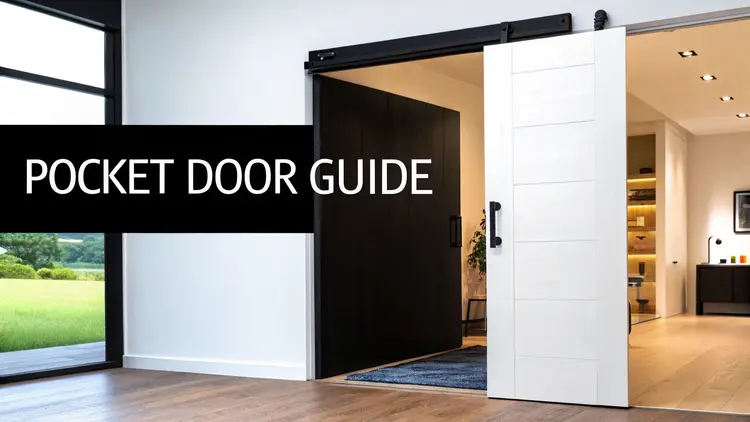
Imagine getting back up to ten square feet of precious floor space with every single door you install. That’s not a fantasy; it’s the simple, clever reality of a pocket door system. Instead of swinging out into a room, these doors glide smoothly into a hidden ‘pocket’ built right into the wall, literally vanishing from sight.
What Exactly Are Pocket Door Systems?
Think of a pocket door as a secret panel, but for the modern home. It’s a brilliant piece of architectural problem-solving that lets a standard door slide away effortlessly, creating open, flexible living areas whenever you need them. This isn’t just about a different way to open a door; it’s a strategic decision to make the absolute most of every inch of your home.
Unlike a traditional hinged door that needs a big, clear arc of floor space just to open, a pocket door simply disappears. This makes it a game-changer for smaller UK homes, flats, and extensions where every square foot is at a premium.
How Pocket Door Systems Work
The system itself is surprisingly straightforward. It’s really just a few key parts working together to pull off that seamless vanishing act. The real magic happens inside the wall, where a purpose-built metal or timber frame—often called a ‘cassette’—creates the hollow cavity, or “pocket.”
The beauty of a pocket door lies in its invisibility. The entire mechanism is tucked away inside the wall, letting the door itself become a clean, minimalist design feature instead of a spatial headache.
The door panel has rollers or hangers fixed to the top, which hook onto a track running along the top of this cassette. This track is the system’s backbone, ensuring the door glides quietly and smoothly. When you pull the handle, the door moves along the track and slips neatly into the wall cavity. Simple as that.
More Than Just a Functional Door
While the headline benefit is obviously saving space, pocket doors are now a powerful tool in any designer’s or savvy homeowner’s toolkit. They help achieve that clean, uncluttered look that’s so hard to get right with traditional doors getting in the way.
Here’s how they can completely change a space:
- Creating Flexible Zones: Got an open-plan layout? A pair of pocket doors can close off a home office or snug from the main living area, giving you privacy without permanently chopping up the space.
- Enhancing Minimalist Design: By getting rid of the visual noise of door swings, architraves, and bulky hinges, pocket doors are a must for a sleek, modern finish. When open, the doorway is just a clean, crisp opening.
- Improving Flow and Light: A pocket door with glass panels can separate a hallway from a living room while letting natural light pour through. It keeps zones distinct but connected, making both areas feel brighter and bigger.
Ultimately, a pocket door system elevates a simple doorway from a functional necessity into a properly considered part of your home’s design. It’s a solution that works smarter, not harder, to make your space feel larger, more adaptable, and beautifully cohesive.
When you start looking into pocket door systems, you quickly realise it’s not a simple one-size-fits-all deal. It’s a bit like choosing a car; a small city runaround serves a completely different purpose to a rugged 4×4. The right system for your home depends on your wall construction, the look you’re going for, and of course, your budget.
Getting your head around the different types means you can pick a system that will work beautifully for years, instead of becoming a daily source of frustration. The main differences come down to how the system is built and fitted into your wall.
The Standard Cassette System
For most projects, the standard cassette system is the most common and reliable option. Think of it as a pre-made metal cage—the ‘cassette’—that gets installed directly into a stud wall. This solid structure takes the place of the usual timber studs, creating a perfectly aligned and protected pocket for the door to slide into.
This approach is so dependable because the cassette frame guarantees the track stays dead straight and the pocket remains free of things that could cause problems, like warped timber or a stray nail. It’s the go-to choice for new builds and major renovations where you’re building walls from scratch. The result? A door that glides like a dream and is protected from damage for years to come.
To get a better idea of how it all fits together, take a look at a complete pocket door kit. Seeing the components laid out really helps you visualise how the cassette, track, and door work in harmony.
Frameless and Riser Door Systems
If you’re chasing that ultra-minimalist look, a frameless system is the way to go. These are cleverly engineered to be completely invisible once they’ve been plastered over. You get no bulky architraves or visible door frames—just a clean, sharp opening in the wall that makes the door itself seem to float.
A frameless system is less about the door and more about the seamless opening it creates. It’s a design-led choice, perfect for modern, uncluttered homes where you want the doorway to blend right into the architecture.
Getting these systems right demands a meticulous installation. The plasterwork has to meet the frame perfectly to achieve that flawless, ‘no-frame’ appearance. They are a premium option, often chosen by architects and designers who are aiming for clean lines and a high-end finish.
Surface-Mounted Sliding Systems
But what if you can’t open up your wall? This is where surface-mounted systems save the day. Instead of hiding the door in a pocket, the track is mounted directly onto the face of the wall, just above the doorway. The door then simply slides along this external track, covering the opening like a moving panel.
It’s a really practical fix for solid brick walls or in renovations where disturbing the existing wall structure isn’t feasible or would be too expensive. You don’t get the ‘disappearing door’ magic of a true pocket system, but you still get all the space-saving benefits of not having a swinging door in the way.
This handy infographic shows just how a true pocket door system can free up your floor plan.
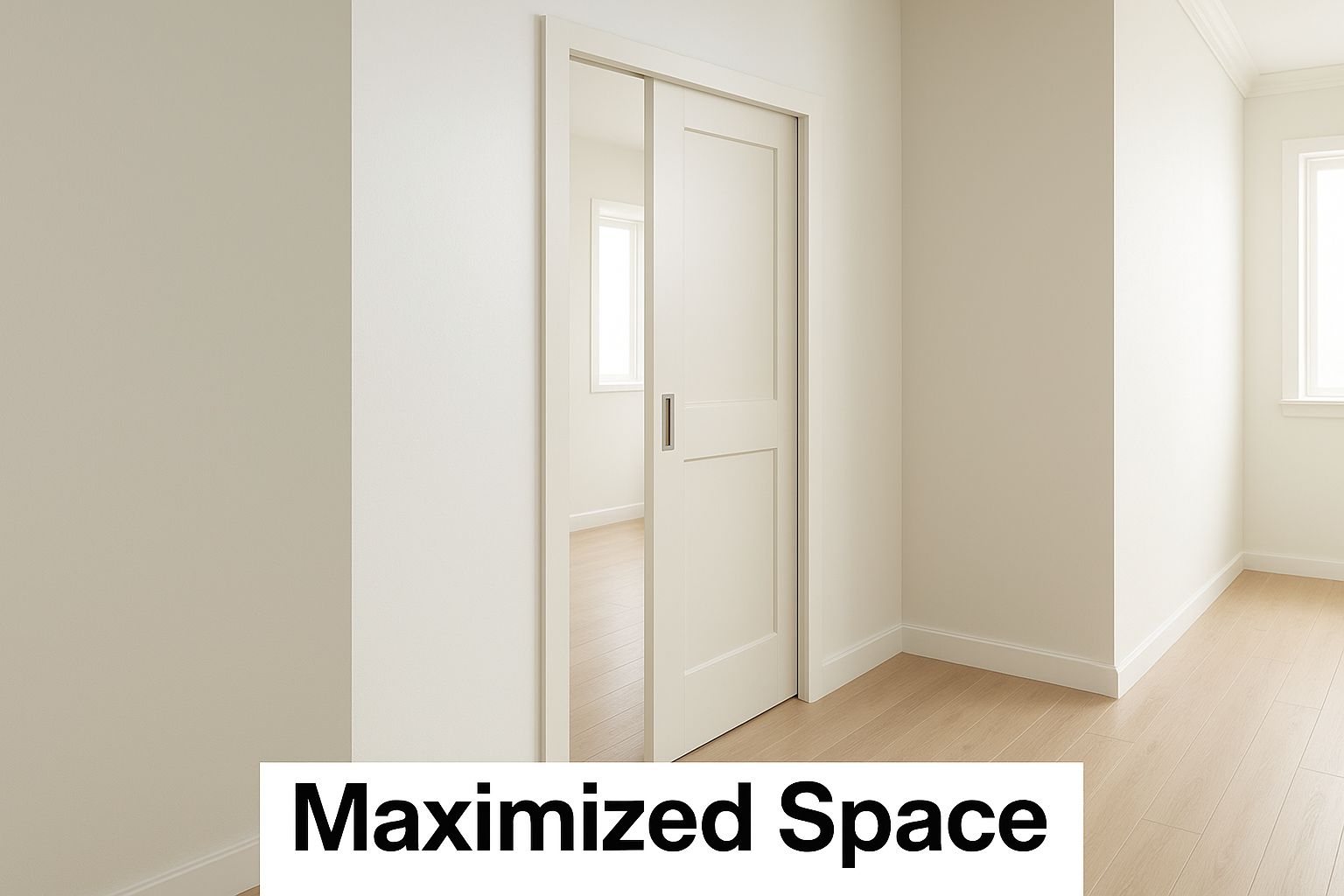
As you can see, by getting rid of the door’s swing arc, the pocket door reclaims valuable floor space that would otherwise be wasted.
Choosing the Right System for Your Project
To help you decide which path to take, here’s a quick breakdown of the main system types.
Comparing Pocket Door System Types
| System Type | Best For | Installation Notes | Key Feature |
|---|---|---|---|
| Standard Cassette | New builds & major renovations with stud walls. | Replaces timber studs; requires wall to be open. | Structural rigidity and smooth, reliable operation. |
| Frameless System | High-end minimalist and contemporary interiors. | Meticulous plastering is essential for a seamless finish. | No visible architrave or frame for a clean look. |
| Surface-Mounted | Solid walls or retrofits where opening a wall isn’t possible. | Track is mounted directly to the wall face; easiest install. | Saves space without needing a wall cavity. |
Ultimately, the best choice hinges on the specifics of your project—from the wall type to the final look you want to achieve.
Options for Wider Openings
Pocket doors aren’t just for single doorways. If you have a larger opening to span, there are some fantastic systems designed just for that.
- Double Pocket Doors: This is a classic solution that uses two opposing systems meeting in the middle. It’s a brilliant way to separate a living room from a dining room, creating a grand, open feel when both doors are retracted.
- Telescopic Systems: For really wide openings, a telescopic system is an ingenious option. It uses two or more overlapping panels that slide back into a single pocket. As you open the first door, it pulls the others along with it, a bit like a concertina, allowing for a huge opening from a surprisingly small pocket.
Knowing these different options is the first step. Whether you need the solid performance of a cassette, the sleek finish of a frameless design, or a clever solution for an extra-wide space, there’s a pocket door system out there that’s perfect for the job.
The Real Benefits of Installing Pocket Doors
Everyone talks about how pocket doors reclaim floor space, and that’s definitely their most famous perk. But honestly, their real value lies in the smaller, everyday ways they make your home feel and work better. It’s about more than just getting rid of a swinging door; it’s about fundamentally changing a room’s entire vibe.
The first thing you’ll notice is all that extra usable space. In a typical UK home, a standard hinged door can make about ten square feet of floor and wall space feel awkward and unusable. A pocket door hands all of that back to you. Suddenly, you can put a bookshelf, a piece of art, or a slim console table where it was once impossible. This is a total game-changer in tight spots like ensuites, utility rooms, and home offices where every inch truly matters.
This isn’t just a niche idea anymore; it’s a worldwide trend towards smarter urban living. The global pocket door market is expected to reach USD 12.03 billion by 2033, a huge jump from where it is today. This boom is fuelled by growing cities and the need for high-density housing, which makes pocket doors a no-brainer for space-conscious UK homes and flats. If you’re interested in the numbers, you can dive deeper into these trends over at the Business Research Insights website.
Creating a Cleaner, Calmer Aesthetic
Beyond the practical stuff, pocket doors have a massive impact on a home’s look and feel. By vanishing into the wall, they help create those clean, unbroken lines that are so key to minimalist and contemporary design. When the door’s open, you’re left with a simple, elegant opening—no visual clutter from hinges, frames, or the door itself.
This creates an immediate sense of calm and order. Think about a hallway with several traditional doors all jutting out, creating a busy, almost chaotic effect. Swapping them for pocket doors gives you a smooth, serene corridor that feels far more spacious and intentional.
A pocket door system transforms a functional barrier into a fluid architectural element. It allows you to control a space without visually dividing it, supporting a more flexible and open-plan way of living.
Improving Accessibility and Flow
For anyone with mobility challenges, a swinging door can be a real headache. Having to navigate around the door’s arc is tough for wheelchair users or people with walkers. Pocket doors get rid of that obstacle entirely.
- Effortless Passage: They create a wide, clear opening that’s easy to move through without stepping back or shuffling to the side.
- Enhanced Independence: This simple switch can make a huge difference to someone’s independence and ease of movement at home, especially in essential areas like bathrooms and bedrooms.
But this improved flow isn’t just about accessibility. In high-traffic zones, you get to skip that awkward “door dance” where people have to get out of each other’s way. Moving through your home just feels more natural and fluid.
Boosting Natural Light
Here’s another fantastic benefit: using glazed pocket doors. By fitting your system with a door that has glass panels, you can physically divide two rooms while letting them share light. The effect can be transformative.
For instance, a windowless internal bathroom can “borrow” light from an adjoining bedroom, making it feel brighter and less boxed-in. Or a dark hallway can draw in light from the living room, feeling instantly more open and welcoming.
You still get privacy and sound separation when the door is closed, but you can enjoy a visual connection and brighter spaces when it’s open. It’s a clever design trick for making your whole home feel bigger and more connected, proving that the right pocket door offers so much more than its slick disappearing act.
How to Choose the Right Pocket Door System
Picking the right hardware for your pocket door is easily the most critical decision you’ll make. Get it right, and you’ll have a door that glides like a dream for decades. Get it wrong, and you’re setting yourself up for sticking, jamming, and headaches you just don’t need.
Think of it less like buying a door and more like choosing the engine for a car. The performance is all about what’s under the bonnet, and the same is true for the hidden hardware that makes a pocket door work. This guide will walk you through exactly what to look for, so you end up with a system that’s built to last.
Match the System to Your Door Weight
First things first: you absolutely must match the system’s weight capacity to your door panel. Every pocket door kit is rated for a specific maximum weight, and trying to cheat this is a recipe for failure. A system built for a light, hollow-core door will buckle under the pressure of a heavy solid oak or glass panel.
This isn’t just about whether it works on day one. An overloaded track will slowly bend over time, and the rollers will wear out far too quickly. The result? A door that sags, scrapes along the floor, or seizes up completely.
Pro Tip: Always choose a system with a weight capacity that comfortably exceeds your door’s actual weight. If your door is 45 kg, go for a system rated for 60 kg or more. That extra bit of tolerance acts as a safety net and guarantees a much smoother glide.
Here’s a quick breakdown of what to expect:
- Hollow-Core Doors: These are the lightweights, usually under 25 kg. Most standard pocket door systems can handle these with ease.
- Solid-Core Doors: A fantastic choice for soundproofing and a quality feel, but they are much heavier, often weighing 40-80 kg or more. These demand a heavy-duty system, no exceptions.
- Glass Panel Doors: The weight here can be all over the place, depending on the glass thickness and frame. Always, always check the manufacturer’s specs before you buy.
Measure Your Wall Thickness Accurately
The next crucial piece of the puzzle is your wall’s thickness. Standard UK stud walls are built to pretty specific dimensions, and pocket door cassettes are designed to slot right into them. You need to be sure the system you’re eyeing up is compatible with your finished wall thickness.
A system made for a 125mm wall simply won’t fit into a 100mm one. Trying to squeeze it in will only compromise your wall’s structural integrity. The most common kits are designed for finished walls of either 100mm or 125mm. Measure twice, order once!
Key Features to Look For
Beyond the basics of weight and size, a few key features can elevate a good system into a great one. These are the details that make a real difference to your daily life.
1. Soft-Close and Soft-Open Mechanisms A soft-close damper is, in my opinion, a non-negotiable. It catches the door in its last few centimetres of travel and gently pulls it shut, eliminating any chance of a slam. A soft-open does the same thing when the door retracts into the pocket. It’s a touch of luxury that’s essential for homes with kids or for anyone who appreciates a bit of peace and quiet.
2. Push-to-Open Latches Want that ultra-clean, handle-free look? A push-to-open latch is the answer. A gentle push on the door’s edge makes it pop out from the pocket, ready for you to slide it open. It’s the perfect finishing touch for achieving a flush, minimalist vibe in modern interiors.
3. Soundproofing Enhancements One of the most common worries with pocket door systems is sound transfer. While a standard pocket door won’t block noise as well as a solid hinged door, you can get surprisingly close with the right upgrades. Look for kits that offer optional acoustic packages. These typically include:
- High-density jambs and seals to close the gaps around the door.
- Drop-down seals that automatically seal the gap at the bottom of the door when it’s closed.
- Acoustic linings for the cassette itself to deaden sound inside the wall.
By weighing up these factors—door weight, wall thickness, and those all-important features—you can choose a pocket door system with total confidence, knowing it will meet both your practical needs and design dreams.
Understanding the Pocket Door Installation Process
While we always recommend getting a professional joiner or carpenter on board for the best results, having a good grasp of the installation process is invaluable. It helps you understand what’s involved and have confident conversations with your installer.
Installing a pocket door system is a job where precision is absolutely everything. Even the tiniest error can lead to a door that sticks, scrapes, or rattles for years to come. Think of it less like hanging a door and more like building a new, perfectly integrated part of your wall. Every component has to be flawlessly aligned for it to work smoothly.
Creating the Rough Opening
First things first, the wall needs to be opened up. This isn’t just a door-sized hole; it’s a much larger “rough opening” designed to house the entire pocket door cassette. If you’re retrofitting into an existing wall, this means carefully taking down plasterboard and cutting away some of the timber studs.
It is absolutely crucial to check if the wall is load-bearing before a single cut is made. If it is, you’ll need a structural engineer to specify a new lintel to carry the weight from above. Skipping this is a serious safety risk and not worth the gamble.
Installing the Cassette and Track
With the opening ready, the pocket door cassette can be assembled and fitted. This metal frame is the heart of the system—it forms the ‘pocket’ for the door to slide into and replaces the old timber studs, providing all the structural support for the new plasterboard.
The most critical part of this whole job is getting the track right. It has to be perfectly level.
A misaligned track is the number one cause of pocket door problems. Even a slight slope will make the door drift open or closed on its own, or cause it to bind and scrape. It’s the difference between a door that glides and one that grinds.
A good installer will use a spirit level to check, double-check, and triple-check the track before fixing it in place. It’s the one detail that can’t be compromised. The demand for clever solutions like pocket doors is on the rise, with residential renovations now driving 45% of the UK’s £2.41 billion door market. This sector is expected to hit £3.06 billion by 2029, showing just how much homeowners value quality and function.
Hanging and Adjusting the Door
Once the cassette and track are securely in place, it’s time to hang the door. The roller hangers are attached to the top edge of the door, which is then lifted and hooked onto the track inside the pocket.
Next comes the fine-tuning. This is where the real skill shows, as the installer adjusts the hangers to ensure:
- The door hangs perfectly plumb (straight up and down).
- There’s a consistent, even gap between the door and the floor.
- The door slides effortlessly without catching or rubbing anywhere.
If you’ve opted for a soft-close mechanism, this is also when it will be installed and calibrated for that smooth, quiet finish.
Finishing the Wall
The final stage is all about making everything look seamless. Plasterboard is fixed over the metal cassette frame, with the seams carefully taped and jointed to create a flawlessly smooth wall surface. You’d never know there was a complex mechanism hidden inside.
After the plaster has dried, the decorative finishing touches are added. This includes fitting the jamb kit—the timber linings for the doorway and pocket entrance—and the architraves that frame the opening. You can see great examples of how different door frames can transform the final look. The last job is to fit the handle or flush pull, completing the installation and leaving you with a beautiful, space-saving new door.
Maintaining and Future-Proofing Your System
A high-quality pocket door system isn’t just a door; it’s a built-in architectural feature and a serious investment in your home’s design. Think of it less like a standard hinged door and more like a permanent upgrade, designed to last for the long haul. With just a little straightforward care, you can make sure your system operates as smoothly as the day it was installed and even keep it ready for future tech upgrades.
The good news is that modern pocket doors are incredibly low-maintenance. The most important job is simply keeping the overhead track clean. Over time, dust, debris, and pet hair can build up in the track, which might make the rollers feel a bit gritty or less smooth. A quick vacuum with a brush attachment or even a blast of compressed air every few months is usually all it takes to clear it out.
Routine Checks for Flawless Operation
Beyond a quick clean, it’s a good idea to give your system a quick once-over every six months or so to catch any minor issues before they become problems. Just pay attention to how the door feels when you slide it. Is the glide still silent and effortless? Does it hang perfectly straight?
Most issues, if they pop up, will be with the rollers. While high-quality systems are built for longevity, it’s still smart to listen for any new noises like squeaking or grinding. This can be a sign that a roller needs a slight adjustment or a touch of lubrication—a small amount of silicone-based lubricant often does the trick. Also, give the handle or flush pull a gentle wiggle to make sure it’s still secure, as they can loosen over time with daily use. Finding the right hardware is key, and you can explore a wide variety of high-quality door handles and knobs to complement your style.
One of the biggest leaps forward in modern pocket door systems is their serviceability. Premium kits are now engineered so you can remove the door panel for maintenance or replacement without having to smash open the finished wall. This access is a critical feature to look for when you’re buying.
Future-Proofing with Smart Technology
Pocket doors aren’t just a classic space-saving solution; they’re also evolving right alongside modern home technology. The integration of motorisation and smart home features is a huge reason for their growing popularity, making them a truly forward-thinking choice for any home.
This trend is a big part of the market’s recent growth. The global pocket door market, valued at USD 8.97 billion, is projected to soar to USD 14.25 billion by 2033. This boom is heavily influenced by innovations like motorised systems that you can control from anywhere. You can find out more about these market trends and what is driving pocket door innovation.
So, what does this mean for you?
- Motorised Operation: Systems can be fitted with whisper-quiet motors, letting you open and close the door with a remote, a wall switch, or even a motion sensor.
- Smart Home Integration: These motorised systems can be linked straight into your smart home hub, allowing for voice commands through assistants like Alexa or Google Assistant.
- Enhanced Accessibility: For anyone with mobility challenges, a fully automated door offers a massive boost in convenience and independence.
By choosing a robust, high-quality cassette system today, you’re also installing a platform that can easily be upgraded with these smart features down the line. It ensures your investment stays practical and relevant for years to come.
Of course. Here is the rewritten section, crafted to match the human-written, expert tone and style of the provided examples.
Your Pocket Door Questions, Answered
Even with all the benefits laid out, you probably still have a few practical questions buzzing around. Making the final call on a pocket door system often comes down to the nuts and bolts, so let’s clear up some of the most common queries we hear from homeowners.
Are Pocket Doors Any Good for Soundproofing?
This is a big one, and let’s be honest: a standard, off-the-shelf pocket door won’t block sound as well as a traditional hinged door. Because of the small gaps around the door and the hollow wall cavity it slides into, sound has an easier path to travel.
But that absolutely doesn’t mean you have to put up with noise. For rooms where peace and quiet are a must—think a home office, a nursery, or a bedroom—you can get specialised acoustic pocket door kits. These are a game-changer, engineered from the ground up to tackle sound transfer.
They usually come with:
- Acoustic Jambs: These are high-density timber jambs fitted with rubber seals that compress when the door is closed, sealing the gaps.
- Drop-Down Seals: A clever automatic seal that drops to the floor the moment the door closes, completely blocking that pesky gap underneath.
- Enhanced Cassettes: Some systems even feature denser materials or special acoustic linings for the pocket itself, deadening sound right inside the wall.
With these features in place, a good acoustic pocket door can easily rival the sound insulation of a solid-core hinged door.
Can You Put a Pocket Door into an Existing Wall?
Yes, you certainly can, and it’s a really popular home improvement project. It is a bit more involved than fitting one in a new build, though, because you’ll need to open up the wall to get the cassette frame inside.
The job involves carefully removing a section of plasterboard, cutting away a few of the timber studs, and then installing the new metal pocket frame. The most critical step here is figuring out if the wall is load-bearing.
A load-bearing wall is doing the serious work of supporting the weight of the floor or roof above. You must never cut into one without putting in the right structural support, as it’s incredibly dangerous. If you even suspect your wall is load-bearing, you must call in a structural engineer or a qualified builder. They can install a proper header (or lintel) to carry the load safely.
What if the Door Comes Off the Track?
This is the classic fear that puts a lot of people off pocket doors, but it’s mostly a ghost from the past. Old, clunky systems could be a true nightmare, often forcing you to smash open the wall just to get to the hardware.
Thankfully, any decent, modern pocket door system is designed to completely avoid this headache. They are built with accessible hardware. Should a door ever come off its rollers, you can simply detach the door panel from the track right through the doorway—no demolition needed. This means you can re-hang it, make adjustments, or do a bit of maintenance with zero fuss before sliding it back into the pocket. When you’re choosing a system, always ask if it has this ‘easy removal’ feature. It’s a lifesaver.
Ready to reclaim your space with a smart, stylish solution? At Doors Delivered, we offer a curated selection of high-quality pocket door systems designed for reliability and seamless operation. Explore our full range of pocket doors today and find the perfect fit for your project.