
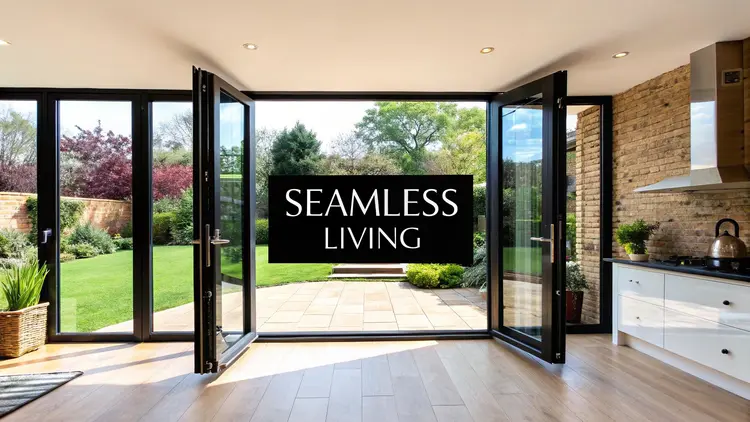
Picture this: your living room extends effortlessly into your garden, creating one huge, light-drenched space. That’s the magic of folding glass doors. Instead of a standard doorway, you get a whole system of connected glass panels that fold back on themselves, just like an accordion, opening up an entire wall.
Why Folding Glass Doors Are Transforming UK Homes
Often known as bifold doors, these aren’t just a way to get in and out; they’re an architectural statement that completely rethinks the line between inside and out. Think of a classic patio door as a standard window, giving you a limited peek at your garden. Folding doors, on the other hand, are the cinematic widescreen version, tearing down the barrier to create a spectacular, open-plan experience.
The secret is in the concertina-style mechanism. The panels glide smoothly along a track and stack neatly to one side. This simple but brilliant design allows for an opening that can be up to 90% clear—a huge advantage over sliding doors, which always leave at least half the frame in the way. It’s this unique functionality that has made them a must-have for modern home renovations and new builds all across the UK.
The Core Appeal
So, what’s driving this trend? At its heart, it’s the desire for a real, tangible connection with our outdoor spaces. By getting rid of a solid wall, folding glass doors deliver on several fronts:
- Maximised Natural Light: They flood your home with daylight, making rooms feel bigger, brighter, and far more inviting.
- Seamless Indoor-Outdoor Flow: They’re perfect for summer barbecues or just enjoying your garden view, merging your patio and living room into one fantastic entertaining space.
- Enhanced Sense of Space: Even when closed, the uninterrupted views create an illusion of a much larger room.
The idea is similar to what the scholar Dr. Rudine Sims Bishop once described as “sliding glass doors” in literature—an opening that lets you step into another world. With architecture, these doors let you step right into your garden, transforming the whole feel of your home.
Understanding the Basics
To make a smart choice, it helps to get to grips with a few key terms. First, sightlines refer to the thickness of the frame around each glass panel. Slimmer sightlines mean you get more glass and a clearer, less obstructed view.
Next is the threshold, which is the track running along the bottom. You can get everything from fully weatherproof options to completely flush, low-level designs for that perfect, seamless transition between indoors and out.
Finally, the panel configuration is all about how many door panels you have and which way they fold. This is a crucial decision that impacts both how you use the doors and how they look.
When you’re planning to install folding glass doors, one of the biggest decisions you’ll make is the frame material. This choice is about more than just looks; it sets the tone for everything from how they’ll stand up to the famously unpredictable British weather to how much maintenance you’ll be signing up for. It’s the very foundation of their character and performance.
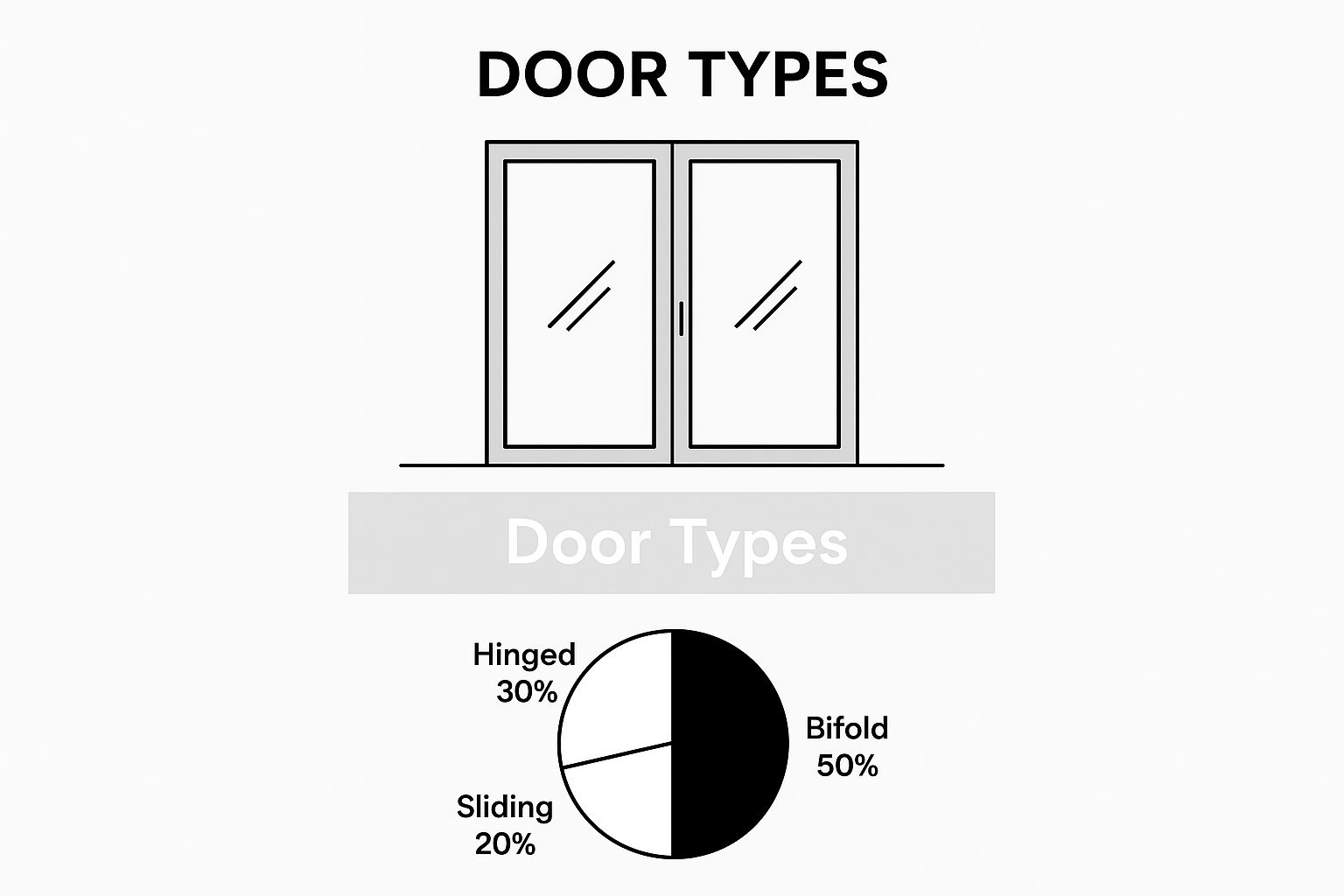
The UK market for bifold doors is growing, and fast. It’s forecast to expand by 6.1% annually between 2025 and 2030. While classic timber frames still held the top spot in 2024 with nearly 44% of the market, it’s the sleek, modern appeal of aluminium that’s making it the fastest-growing contender. If you want to dive deeper into the numbers, you can explore more market insights on the growth of bifold doors from Grand View Research.
Let’s break down the main players so you can figure out what’s right for your home.
Sleek and Strong Aluminium
If you’re after a sharp, contemporary look, aluminium is almost certainly your best bet. Its main superpower is its incredible strength-to-weight ratio. This allows for ultra-slim frames that maximise the amount of glass, giving you those breathtaking, practically uninterrupted views that flood your home with natural light.
But it’s not just a pretty face. Aluminium is exceptionally tough and wonderfully low-maintenance. It won’t rust or warp when battered by rain and fluctuating temperatures, making it a rock-solid choice for our climate. A quick wipe-down now and then is all it takes to keep the frames looking brand new for years.
The Timeless Warmth of Timber
For a classic or rustic home, nothing quite matches the natural beauty of timber. Wooden frames have an organic warmth and character that other materials just can’t replicate. On top of that, they’re natural insulators, which is a nice bonus for your home’s thermal efficiency.
Of course, this traditional charm does come with a bit of a trade-off: maintenance. To keep them looking their best and to protect them from moisture, rot, or warping, timber frames need regular TLC in the form of staining or painting. If you love that timeless aesthetic and don’t mind a bit of upkeep, timber is a beautiful and rewarding option.
Choosing a material is about balancing aesthetics with practicality. Your decision should harmonise with your home’s existing architecture, your lifestyle, and the local climate to ensure the doors are a perfect fit for years to come.
Practical and Affordable uPVC
Unplasticised Polyvinyl Chloride, or uPVC as it’s more commonly known, is the go-to for anyone working with a tighter budget. Its main draws are its low cost and minimal maintenance needs. Just like aluminium, it won’t rot or corrode and is a breeze to clean, making it a seriously practical choice for busy households.
So, what’s the compromise? It mostly comes down to design. uPVC frames are typically bulkier than aluminium ones, meaning you get thicker sightlines and a bit less glass. While modern uPVC comes in a decent range of colours and finishes, it doesn’t quite deliver the premium, high-end feel of aluminium or the classic appeal of real wood.
Folding Glass Door Material Comparison
To make the decision a little easier, here’s a straightforward comparison of the three main contenders. Thinking about what matters most to you—be it cost, looks, or long-term care—will help you zero in on the perfect fit.
| Feature | Aluminium | Timber | uPVC |
|---|---|---|---|
| Aesthetics | Modern, sleek with ultra-slim sightlines. | Classic, warm, and natural. | Practical, but frames can be bulky. |
| Durability | Excellent. Resists rust, warping, and corrosion. | Good, but requires regular maintenance. | Very good. Resists rot and corrosion. |
| Maintenance | Very low – just needs occasional cleaning. | High – needs regular staining or painting. | Very low – easy to clean. |
| Cost | High-end, premium price point. | Mid to high-range, depending on the wood type. | Most budget-friendly option. |
| Thermal Efficency | Good, especially with a thermal break. | Excellent natural insulator. | Good insulation properties. |
| Best For | Contemporary homes with large openings. | Traditional, rustic, or period properties. | Budgets where practicality is the priority. |
Ultimately, there isn’t one “best” material—only the best material for your project. By weighing up these factors against your home’s style and your own priorities, you’ll be well on your way to choosing doors you’ll love for decades.
How Much Do Folding Glass Doors Cost in the UK?
When you’re dreaming of that seamless transition between your home and garden, one of the first questions that comes to mind is, “What’s this actually going to cost?” Getting a grip on the full price of folding glass doors is key to planning your project without any nasty financial surprises down the line.
Think of it less like buying an item off the shelf and more like commissioning a bespoke piece of architecture. The final figure on your invoice isn’t just for the doors; it’s a sum of the product itself and several other crucial elements.
The price tag is initially shaped by three main things: the frame material you pick, the overall size of the opening, and how many individual door panels you need. As we’ve seen, a high-performance material like aluminium will naturally sit at a higher price point than practical uPVC, with traditional timber often landing somewhere in between. And, of course, a modest three-metre, three-panel setup will be far more budget-friendly than a grand six-metre, six-panel system designed to replace an entire wall.
Breaking Down the Core Costs
The price you’re quoted is about more than just the frame and the glass. Here’s a look at what makes up the total budget:
- The Door System: This is your starting point—the base cost for the panels, frames, and the all-important running gear that makes them glide. Prices can vary hugely depending on the brand and the quality of the materials.
- Glazing Specification: Standard double glazing is the baseline for most systems. If you want to upgrade to triple glazing for superior thermal efficiency or opt for specialised glass like solar control or self-cleaning panes, this will add to the cost.
- Customisation Choices: Anything outside of standard options, like a unique RAL colour finish, sleek integrated blinds, or designer hardware, will push the final price up.
This is a significant investment, reflecting a huge trend in UK home improvements. The wider UK doors market was valued at around £4.7 billion in 2023 and is expected to climb to £5.8 billion by 2032. While a large portion of homeowners—around 62%—still choose budget-friendly uPVC for their patio doors, premium aluminium is the undisputed leader for high-end installations like folding glass doors. You can dive deeper into these figures with a UK patio door market report from Sheerwater Glass.
Looking Beyond the Door Itself
A common pitfall is budgeting only for the doors. In reality, several other services are essential for a safe, successful, and long-lasting installation, and these costs need to be factored in right from the beginning.
Don’t overlook the associated works. A perfect installation of folding glass doors often requires structural changes and finishing touches that are just as important as the doors themselves.
Here are the key additional expenses you’ll likely encounter:
- Professional Installation: This is absolutely not a DIY job. The labour costs for a certified fitting team are a must-have to ensure your doors operate flawlessly and, crucially, to keep your warranty valid.
- Structural Work: If you’re creating a brand-new opening or making an existing one wider, you’ll almost certainly need a new steel beam (lintel) installed to carry the weight of the wall above. This part of the job requires calculations from a structural engineer and the skills of experienced builders.
- Finishing Touches: Once the doors are in place, the work isn’t over. You will need to budget for plastering, rendering, and decorating to make good the surrounding walls, both inside and out, blending the new feature seamlessly into your home.
Once you’ve landed on the right material, it’s time to dive into the details that will take your new folding glass doors from good to truly great. These are the choices that define how you’ll live with your doors day-to-day, affecting everything from function to the final aesthetic.
Think of it as choreographing the flow between your indoor and outdoor areas. You need to consider how you’ll move through the space, what the doors will look like when open and closed, and how they’ll stand up to the British weather. Getting these details spot-on is what ensures your doors are a joy to use for years to come.
Door Configuration and Daily Use
First up, let’s talk configuration. This is all about how many individual glass panels you’ll have, which way they open, and how they stack up. A crucial feature to think about here is the traffic door.
A traffic door is simply a single door, built into one end of the set, that opens conventionally like any other back door. It’s incredibly practical. Need to let the dog out or pop into the garden for a moment? You can do it in a flash without having to concertina the entire system open. It’s a small feature that makes a huge difference in daily life.
You’ll also need to decide whether the doors fold inwards into the room or outwards onto the patio. Outward-opening doors are by far the most popular choice in the UK. Why? Because they don’t eat into your precious interior living space when they’re fully folded back.
Decoding Your Glazing Options
The glass itself is a massive part of any folding door system. It might seem like just a window, but your choice of glazing has a huge impact on your home’s comfort and, importantly, your energy bills. The two main options you’ll encounter are:
- Double Glazing: This is the standard for modern homes, featuring two panes of glass with an inert gas like argon sandwiched between them. It offers solid thermal performance, helping to keep your home warm and cosy.
- Triple Glazing: This takes it a step further, adding a third pane of glass and another gas-filled cavity. It provides superior thermal insulation, making it an excellent investment for homes in exposed locations or for anyone looking to really maximise energy efficiency.
Choosing the right glazing is about more than just temperature control. Specialised coatings can offer solar control to prevent overheating in south-facing rooms, while laminated or toughened glass can provide enhanced security and safety.
Finding the Right Threshold
The threshold is the track at the bottom of the doors that the panels glide along. This is a vital detail for achieving that seamless, magazine-worthy look, but you have to balance it with practical weatherproofing.
A fully weathered threshold is your best bet for maximum protection against wind and rain. It has a small, raised upstand that creates a super-tight seal when the doors are locked shut.
On the other hand, a low-level or flush threshold sits almost completely level with your internal and external flooring. This creates that beautiful, uninterrupted, and trip-free transition from your home to your garden—perfect for accessibility. While modern designs offer good weather resistance, they might not provide the same bulletproof protection as a fully weathered option in very exposed sites.
Of course. Here is the rewritten section, crafted to sound completely human-written and natural, following all the specified requirements.
How to Ensure a Perfect Installation
Let’s be honest: your stunning new folding glass doors are only as good as their installation. You can pick the most beautiful, high-performance system on the market, but if it’s fitted poorly, you’ll be left with nothing but frustration. A flawless fit is non-negotiable for that silky-smooth glide, complete weather resistance, and proper security. It’s the final, critical piece of the puzzle that brings your entire vision to life.
Believe it or not, a perfect installation starts long before the doors even arrive at your home. It all begins with a meticulous site survey. A seasoned professional will take exact measurements of the opening, check the structural integrity of the surrounding walls, and spot any potential curveballs. This is the blueprint for the whole project, and there is simply no room for guesswork.
Quite often, some structural prep work is needed. If you’re knocking through a wall to create a new opening or making an existing one wider, a steel lintel will almost certainly be required to support the weight of the wall above. This isn’t just a minor detail—it’s a fundamental structural task that keeps your home safe and sound.
Finding a Trusted UK Installer
Once your doors are on order, your focus should shift to finding the right team for the job. Think of your installer as the guardian of your investment; choosing wisely is everything. Here in the UK, the best way to vet a professional is to look for recognised industry accreditations.
These certifications are a clear signal of competence and a commitment to quality. The main ones you’ll want to see are:
- FENSA: This is a government-authorised scheme that confirms installations meet the Building Regulations for England and Wales. It’s a real hallmark of a reputable window and door fitter.
- CERTASS: Much like FENSA, CERTASS is another top-tier scheme that allows installers to self-certify their work against Building Regulations, giving you total confidence in their standards.
Hiring a certified installer isn’t just about ticking a box; it’s about buying peace of mind. A FENSA or CERTASS certificate is proof that the work meets national standards. It even protects your deposit, adding a welcome layer of consumer protection.
Beyond the badges, always ask to see a portfolio of recent, similar projects. Real photos and genuine customer feedback speak volumes about an installer’s craftsmanship. Any professional worth their salt will be proud to show you their work and even provide references you can call. Don’t feel awkward about asking—it’s a standard and sensible part of doing your homework.
Key Questions for Your Potential Fitter
Before you sign on the dotted line, it’s vital to have a frank conversation with any potential installer. Going in armed with a few key questions will help you gauge their expertise and professionalism. A confident, transparent fitter will have no problem giving you detailed answers.
Make sure to ask about their specific experience with the brand and type of folding glass doors you’ve chosen. Find out about the warranties they offer, which should cover both the product and their workmanship. Lastly, insist on a detailed, itemised quote that clearly breaks down all the costs, including removing old doors, making good any plasterwork, and disposing of waste. This kind of clarity is the best way to avoid any unwelcome surprises down the road.
Long-Term Care, Security, and Energy Efficiency
Once your stunning new folding glass doors are in place, you’ll want to make sure they continue to perform beautifully and protect your home for years to come. It all boils down to three things: simple upkeep, solid security, and smart energy efficiency. Getting these right means your investment will keep delivering on comfort, style, and complete peace of mind.
Keeping your doors in top shape is much easier than you might imagine; a little bit of routine care goes a very long way. For the frames—whether aluminium, timber, or uPVC—a quick wipe with a soft cloth and some mild, non-abrasive detergent is all it takes to keep them looking brand new.
The glass is just as straightforward. Use your favourite glass cleaner and a microfibre cloth to get rid of any smudges. The most crucial job, however, is keeping the running gear clean. The bottom track, where the panels glide, needs a regular vacuum or brush-out to clear away any grit, leaves, or other debris that could get in the way of that smooth concertina motion.
Keeping Your Home Safe and Secure
At first glance, a wall of glass might seem like a security risk, but modern folding doors are engineered to be incredibly tough. Manufacturers know that home security is a major concern for UK homeowners, so these systems are packed with advanced protective features.
The foundation of their security is the multi-point locking system. Instead of a single lock, this system drives multiple bolts into the frame at various points—top, middle, and bottom—all with a single turn of the key. This creates a formidable barrier that is extremely difficult for an intruder to breach.
Another vital feature is internally beaded glass. This simply means the small glazing beads that hold the glass in place are on the inside of the door. It’s a clever, simple design that stops a potential burglar from just popping the glass out from the outside.
This focus on security reflects a wider trend. For example, the popularity of composite entrance doors, with their steel-reinforced cores, has led to a reported 12% reduction in burglary claims in some areas. Homeowners now expect this level of security from all entry points, including folding glass doors. You can dive deeper into these UK door industry trends from Sheerwater Glass.
Maximising Your Home’s Energy Efficiency
Beyond their good looks, folding glass doors are powerhouses when it comes to improving your home’s energy efficiency. They help you stay comfortable all year round while potentially trimming your energy bills. This impressive performance is down to a clever combination of advanced glazing and intelligent frame design.
Modern folding glass doors aren’t just about the view; they are a high-performance thermal barrier. They work tirelessly to keep your home warm in winter and comfortably cool in summer, creating a more sustainable and pleasant living environment.
As we’ve touched on, high-performance double or triple glazing creates a powerful insulating layer that dramatically cuts down on heat transfer. The argon gas-filled cavities and low-emissivity (Low-E) coatings work in tandem to reflect heat back into your home in winter and block the sun’s excessive heat in summer.
This advanced glazing is paired with thermal breaks in the frames, especially in aluminium systems. A thermal break is a strip of less conductive material fitted inside the frame to stop heat from escaping or cold from getting in. It acts as a barrier, preventing the frame itself from becoming a thermal bridge. Together, these features make sure your stunning new doors are as efficient as they are beautiful.
Of course. Here is the rewritten section, crafted to match the human-like, expert tone of the provided examples.
Your Folding Door Questions, Answered
Making a big change to your home, like putting in new folding glass doors, naturally brings up a lot of questions. It’s a significant investment that completely changes how a room looks and feels, so you want to be sure you’re making the right call. I’ve heard all the common queries from UK homeowners over the years, so let’s get you some clear, straightforward answers.
We’ll tackle the big topics, from how secure they are to whether they can handle a grim British winter. The goal is to give you the confidence that you’re making a well-informed choice for your home.
Are Folding Glass Doors Secure?
Yes, absolutely. Any modern, high-quality folding door system is built with security as a core feature. Forget the idea of a flimsy glass wall; these are robust systems. They feature multi-point locking mechanisms that bolt the door into the frame in several places at once. This makes them incredibly difficult to force open.
Another key feature to look for is internally beaded glass. All this means is that the little strips holding the glass in place are on the inside of your home. It’s a simple but effective detail that stops anyone from being able to pop the glass out from the outside. Combine that with high-security lock cylinders, and you have a very secure setup.
Can I Use Folding Glass Doors in Winter?
This is probably one of the most common worries I hear, and it’s a fair one. The good news is that modern folding doors are designed for year-round living, not just sunny afternoons. A well-engineered set of doors provides fantastic thermal insulation, keeping your home warm and cosy through the coldest UK months.
It’s not magic; it’s just clever engineering. Here’s how it works:
- Advanced Glazing: Modern doors use double or even triple glazing. This creates an insulating pocket of air, but the real star is the Low-E (low-emissivity) coating, an invisible layer that reflects heat back into your room.
- Thermal Breaks: If you choose aluminium frames, a ‘thermal break’ is non-negotiable. It’s a strip of less conductive material sandwiched between the inner and outer parts of the frame, which physically stops the cold from travelling through the metal and into your home.
With these features working together, your doors will help maintain a comfortable temperature and can genuinely help keep your energy bills down.
The question of whether folding glass doors are suitable for winter is a common concern. The answer is a resounding yes, provided you choose a quality system with modern thermal efficiency features. They are designed to be a permanent, high-performance part of your home’s structure.
Do I Need Planning Permission?
For most projects in the UK, installing folding glass doors falls under ‘permitted development’ rights. This means you do not need to apply for planning permission, especially if you’re just replacing existing doors of a similar size with something new.
However, and this is a big however, you should always double-check with your local planning authority before starting any work. The rules can be much stricter if your home is a listed building, sits in a Conservation Area, or if you’re planning to create a brand-new opening where there wasn’t one before. A quick call can save a lot of headaches down the line.
At Doors Delivered, we specialise in high-quality internal doors and innovative systems that transform spaces. While we focus on internal solutions like pocket doors and concealed frameless doors, we understand the importance of quality throughout a project. Discover how our products can complement your home’s new aesthetic at https://doorsdelivered8675.live-website.com.