
Choosing the right interior door colour schemes can completely transform your home’s atmosphere, turning what are often overlooked passageways into powerful design statements. It’s about so much more than just a lick of paint; it’s about creating flow, defining spaces, and expressing your personal style through a feature that’s present in every single room.
Why Your Interior Door Colour Matters

It’s all too easy to dismiss interior doors as purely functional items, but when you stop and think about it, they represent a significant amount of visual real estate. I like to think of them as the ‘fifth wall’ in every room—a vertical surface that can either blend in seamlessly or stand out as a deliberate, stylish feature. The colour you choose has a direct impact on how a space feels.
For far too long, the default options have been limited to a standard white or perhaps a basic wood finish. While these choices are certainly safe, they often miss a golden opportunity to add real character and depth to your home. A strategic colour choice can solve all sorts of design problems and elevate your entire aesthetic.
The Power of a Coloured Door
A thoughtfully chosen door colour is one of the most cost-effective ways I know to make a high-impact design change. It’s a clever trick that can achieve several goals at once, influencing both the mood and the perceived size of a room.
Here’s what the right door colour can do for your space:
- Create a Focal Point: A bold, contrasting door immediately draws the eye, turning a simple entrance into a deliberate design statement. This is especially effective for highlighting a specific room, like a home office or a cosy library.
- Enhance Space: Painting a door the same colour as the walls can make a small room or narrow hallway feel larger and less cluttered. This monochromatic approach creates an uninterrupted visual line, making the door recede into the background. It’s a classic trick of the trade.
- Establish a Mood: Colour has a powerful psychological effect. A soft, calming blue on a bedroom door can foster a sense of tranquillity, while a deep charcoal or black door can add a touch of sophisticated drama to a living area.
- Improve Cohesion: Consistent door colours, especially when viewed from a central hallway, create a wonderful sense of rhythm and flow throughout the house. This helps to tie different rooms and their individual palettes together into a unified, considered whole.
Choosing a door colour isn’t just about what you like; it’s about listening to what your home needs. The existing finishes, flooring, and lighting all play a role in determining which interior door colour schemes will work best.
This guide is designed to move you beyond the conventional choices. We’ll explore how to balance your personal taste with your home’s architectural style and existing decor. By understanding a few core principles, you’ll gain the confidence to select colours that not only look beautiful but also work hard to make your home feel more complete, considered, and uniquely yours.
Applying Colour Theory to Doors and Walls
Choosing a door colour can feel a bit daunting, but once you get the hang of a few core ideas, it becomes much less intimidating. You don’t need to be an artist to figure out how colours play together; it’s more like pairing flavours in a kitchen. Let’s break down colour theory for your home, turning abstract concepts like colour wheels and temperatures into practical, confident choices for your doors and walls.
At the heart of any great interior door colour scheme is the relationship between different shades. Think about how a bright, zesty cushion can make a neutral sofa sing. In the same way, a door painted in a complementary colour (colours that are opposites on the colour wheel) can instantly become a showstopper. For instance, a deep blue door looks incredible against a wall with warm, orange-toned wood features.
On the other hand, you could go for an analogous scheme. This approach uses colours that are neighbours on the colour wheel, like blues and greens. This creates a much calmer, more cohesive feel. Picture a soft sage green door against pale blue-grey walls—the result is gentle, harmonious, and wonderfully serene.
Using Colour Temperature to Your Advantage
Every single colour has a “temperature”—it’s either warm or cool. Warm colours, like reds, oranges, and yellows, bring a sense of energy and welcome. In contrast, cool colours, such as blues, greens, and purples, lend a feeling of calm and spaciousness.
Mixing these temperatures is a seriously powerful design move. Pairing a warm-toned wall (think a soft, creamy beige) with a cool-toned door (maybe a slate grey) creates a sophisticated, balanced atmosphere. It stops a room from feeling either too stark or overwhelmingly cosy.
The real goal is to be deliberate about the mood you want to create. A warm, earthy terracotta door could be perfect for a lively, social kitchen, while a cool, deep forest green might transform a bedroom into your own private sanctuary.
This infographic gives a great overview of how popular different door colour families are in modern UK homes.
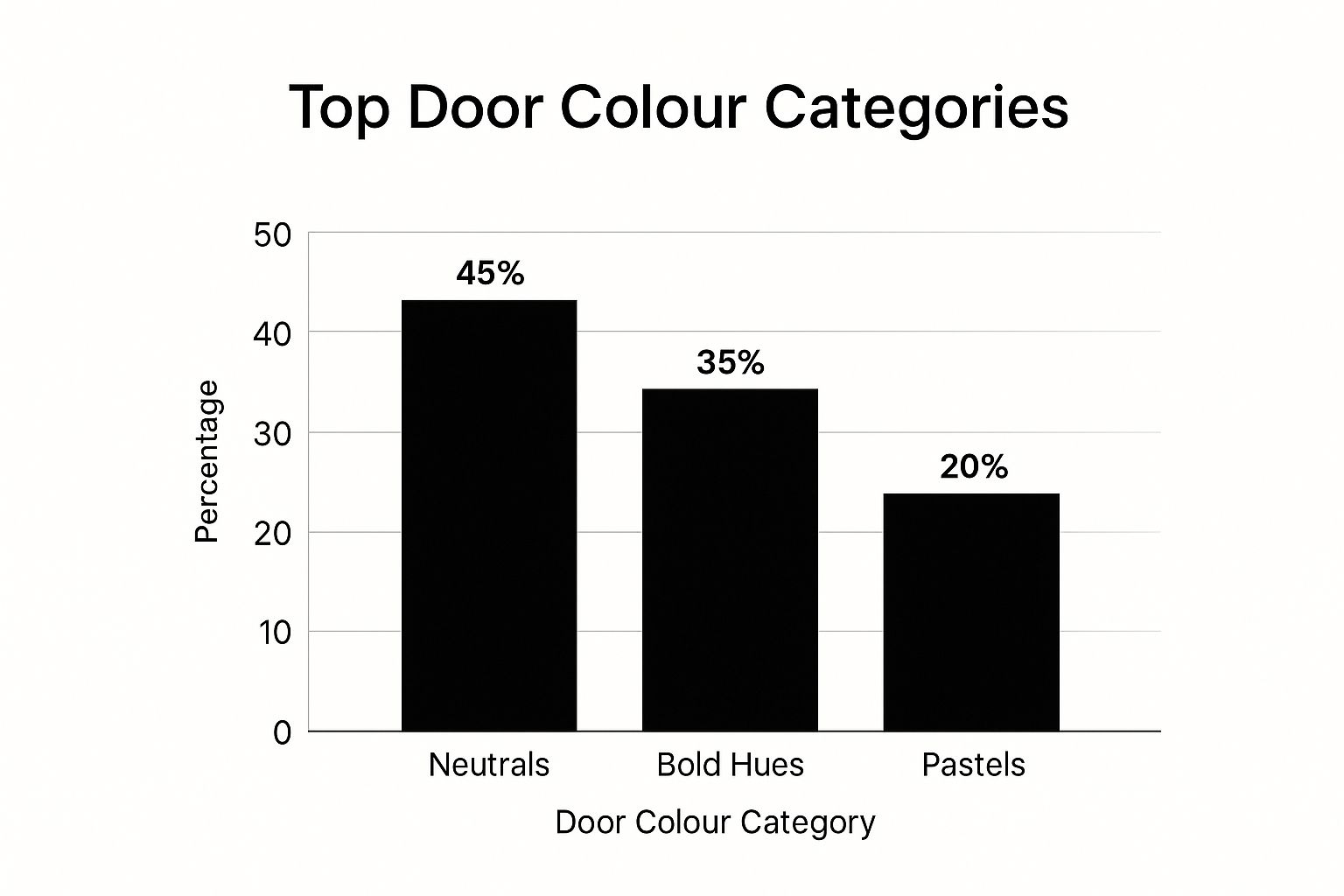
As you can see, while neutrals are still a firm favourite, a huge number of homeowners are getting brave and using bold colours to make a real statement.
The Impact of Light and Undertones
From my experience, the biggest mistake people make is falling in love with a colour under the harsh, artificial lights of a DIY store. A colour’s personality can change completely depending on the light it’s in. Natural daylight, especially here in the UK, often has a cool, slightly blueish quality.
This is where undertones come into play. An undertone is that sneaky hint of colour hiding just beneath the main shade. A grey paint, for example, isn’t just grey; it might have a blue, green, or even a subtle violet undertone.
Here’s the foolproof way to get it right:
- Grab Samples: Never, ever skip this step. Always bring home paint swatches or, even better, a few sample pots.
- Test in Place: Paint a big piece of card and stick it to the wall. Watch how it changes as you move it around the room and as the light shifts throughout the day.
- Check Against Finishes: See how that sample looks next to your flooring, your sofa, and your window frames.
This process lets you see how the colour actually behaves in your space, with your unique light. A grey that looked perfectly neutral in the shop might suddenly look startlingly blue next to your warm oak floors. Spotting this interaction is the key to avoiding expensive and frustrating do-overs.
How Door Colours Influence Room Atmosphere
The colour you choose for your interior doors does more than just look pretty; it actively shapes the mood and perception of a room. A dark door can feel grounding and sophisticated, while a bright one can inject a dose of playful energy. It’s a powerful tool for dictating the atmosphere you want to live in.
Below is a table that breaks down how different colour families can influence your space.
| Colour Family | Psychological Effect | Best Paired With | Ideal Room Application |
|---|---|---|---|
| Warm Tones (Reds, Oranges, Yellows) | Energetic, welcoming, and social. Can make a large space feel cosier. | Cool neutrals like grey or white, or deep blues and greens for a bold contrast. | Kitchens, dining rooms, and living areas where you want to encourage conversation. |
| Cool Tones (Blues, Greens, Purples) | Calming, serene, and spacious. Creates a sense of rest and focus. | Warm woods, brass hardware, and creamy whites to add warmth and prevent coldness. | Bedrooms, home offices, and bathrooms to create a tranquil retreat. |
| Neutrals (Whites, Greys, Beiges) | Versatile, clean, and sophisticated. Can be either calming or stark. | Literally anything! Use them to support bold wall colours or create a seamless look. | Hallways, small rooms, and any space where you want a timeless, flexible backdrop. |
| Darks (Black, Charcoal, Navy) | Dramatic, grounding, and luxurious. Adds depth and a sense of intention. | Crisp whites, light-coloured walls, and metallic accents to pop against the dark. | Studies, libraries, media rooms, or as a single accent door in a neutral hallway. |
Ultimately, whether you want a door that whispers or one that shouts, understanding these effects helps you make a choice that feels right for the room’s purpose and your own personal style. It’s about creating a home that feels intentionally designed, down to the last detail.
Current Interior Door Colour Trends to Watch
While classic neutrals will always be a safe bet, the world of interior door colour schemes is getting a lot more interesting. I’m seeing homeowners and designers all across the UK getting bolder, using doors as a real statement piece. It’s a move away from the purely functional to something that adds genuine character and a contemporary feel to a home.
Right now, two big ideas are leading the charge. First, there’s the rise of what I call the “bold neutrals”—think black and charcoal, colours that bring a sophisticated, grounding energy. On the flip side, we’re seeing a huge wave of love for earthy, nature-inspired tones that make our homes feel calmer and more connected to the outdoors. Let’s break down how these trends are changing the game for UK interiors.
The New Neutrals: Black and Charcoal
For what felt like forever, white or off-white was the go-to for interior doors. Not anymore. That’s been completely turned on its head by the arrival of black and deep charcoal. Forget any ideas about them being gloomy; these shades are the new modern classics, acting as a powerful anchor in any room.
Think of a black door as the perfect full stop in a sentence. It’s confident and deliberate, and you’d be surprised at how versatile it is.
A black or charcoal door set against light-coloured walls creates an incredible contrast, making both the door and the wall behind it really sing. This simple trick adds instant architectural punch and a dose of luxury without being over the top. It’s a look that feels just as at home in a minimalist new-build as it does in a classic period property, adding a crisp, graphic element that feels both fresh and timeless.
I’ve seen these dark neutrals work especially well in a few key spots:
- Hallways: Picture a series of black doors leading off a bright hallway. It creates a stunning rhythm that draws you through the space.
- Against Exposed Brick: The raw, beautiful texture of brickwork is thrown into sharp relief when framed by a sleek, dark door.
- With Metallic Hardware: A bit of polished brass or chrome hardware on a charcoal door? That’s an instant high-end, designer finish.
The key thing to remember is that dark doors don’t have to make a space feel smaller. When you use them thoughtfully against lighter surroundings, they can actually create an illusion of depth by drawing your eye to the edges of the room and framing the view beyond.
This trend is all about adding a bit of weight and intention. A black door never feels like an accident; it feels considered and purposeful. It’s a simple change that delivers some serious, grown-up style.
Nature-Inspired Earthy Tones
The other massive trend I’m seeing everywhere is a shift towards colours that reconnect us with the natural world. This “biophilic” approach—basically, bringing nature into our homes—has had a huge impact on interior door colour schemes. It’s all about creating spaces that feel calming, restorative, and grounded.
You can see this in the explosion of earthy palettes. The 2025 interior door colour trends in the UK are leaning heavily into rich browns, oat, sand, deep burgundy, and even moody navy blues. These colours are all part of this bigger movement. For instance, pairing warm oak doors with sage or olive green walls is a popular way to build a serene atmosphere that taps right into these nature-first principles. You can explore more of these upcoming colour palettes and see how they’re being used in UK homes.
These colours just work because they feel authentic and familiar. They’re the shades of the forest, the soil, and the sky, and they bring a welcome softness and warmth right into our living spaces.
Here’s how you could bring these tones into your own home:
- Deep Greens: A forest or olive green door can turn a bedroom into your own personal, peaceful retreat.
- Warm Terracottas: A door in a terracotta or burnt orange shade adds a welcoming, rustic warmth that’s perfect for kitchens or dining areas.
- Rich Browns: Chocolate or espresso brown doors are a fantastic, softer alternative to black. They give you that same sense of depth but with a much warmer, cosier feel.
These earthy schemes are a dream to pair with natural materials like wood, linen, and stone, which just doubles down on the overall sense of tranquility. Whether you’re in a busy city or out in the quiet countryside, a nature-inspired door colour can help turn your home into a truly soothing sanctuary.
Coordinating Doors with Your Existing Decor

Choosing the right door colour can feel like a tricky puzzle, but there’s a surprisingly straightforward way to solve it. You don’t need to rethink your entire room just for a newly painted door. In my experience, the most successful interior door colour schemes are the ones that deliberately connect with what’s already in the space.
There are three main paths you can take to integrate your doors seamlessly. You can either match the walls for a clean, modern feel, align them with the trim for a touch of classic cohesion, or go bold with a contrasting accent colour that makes your door a real feature. Let’s look at how to pick the right strategy for your home.
Strategy 1: Match Your Door to the Walls
Painting your interior doors the same colour as your walls is a sophisticated trick designers use to make a room feel bigger and more serene. When the door, architrave, and wall all share one continuous colour, the visual breaks simply vanish. This creates an uncluttered, expansive effect because the door just recedes into the background.
This approach works wonders in:
- Small Rooms: In a box room or a compact office, a unified colour scheme fools the eye, making the space feel larger and more cohesive.
- Narrow Hallways: It can make a tight corridor feel wider and less cluttered by smoothing out the visual ‘noise’ of different doors and trims.
- Minimalist Designs: If you’re aiming for that clean, contemporary aesthetic, this monochromatic look is the perfect way to nail it.
Think of this method as creating a calm, seamless backdrop. It lets your furniture, art, and other decor become the stars of the show, rather than the door itself. It’s a quiet but incredibly powerful design choice.
Strategy 2: Align Your Door with the Trim
For a truly timeless and traditional finish, painting your doors the same colour as your skirting boards, window frames, and architraves is the way to go. This technique creates a crisp, architectural frame around your wall colour, giving the room a real sense of structure. A classic white or off-white for all the trim and doors is a fail-safe option that complements almost any wall colour you can imagine.
This strategy really shines when:
- You want a classic, cohesive look: It creates a clean, consistent thread that runs through the whole house, tying different rooms together beautifully.
- Your trim is already a feature: If you have gorgeous, detailed woodwork, painting it and the doors in a single, crisp colour will make those architectural details pop.
A popular modern twist on this is to use a darker neutral, like a soft grey or greige, for all the woodwork and doors. This adds a bit of depth and a contemporary edge while keeping that essential, cohesive framework. It’s a fantastic way to update a traditional home without stripping away its classic charm.
Strategy 3: Create a Contrasting Accent
Now, this is where you can really have some fun. Treating your door as a standalone accent piece is a brilliant way to inject personality and a bit of drama into a room. A bold, unexpected colour can turn a purely functional doorway into a focal point, much like a feature wall. This is your chance to use that vibrant shade you absolutely love but might not be brave enough to splash across all four walls.
The key to getting this right is intention. The accent colour must connect to something else in the room—a shade in your wallpaper, a cushion on the sofa, or a piece of art on the wall. This little link stops the door from looking random and makes it feel like a considered part of the overall design.
Recent UK trends show a definite shift towards bold neutrals for this very purpose. A 2023 study found that a staggering 70% of homeowners now favour black interior doors, with white being the next most popular choice. This reflects a wider move towards timeless, minimalist designs that still make a strong statement. You can read more about these evolving homeowner preferences and see how neutrals are being used to create high-impact looks.
Choosing the Right Paint Finish and Hardware
Picking out a stunning door colour is a brilliant first step, but it’s the paint finish and hardware that really bring the whole look together. If the colour is the main course, think of the finish and hardware as the perfect seasoning and garnish. They’re the details that take a design from just ‘good’ to looking professionally polished.
The sheen of your paint isn’t just about style; it’s a practical decision, too. Interior doors are high-traffic, high-touch surfaces. They have to stand up to the rigours of daily life, which is why getting the finish right is so crucial for any door colour scheme to succeed.
Selecting the Perfect Paint Sheen
The right finish is all about striking a balance between durability and style. How shiny your paint is directly affects how easy it is to clean and how well it conceals any little imperfections on the surface.
Here’s a quick rundown of your options, from the least shiny to the most:
- Matt Finish: This gives you a flat, non-reflective look that’s fantastic for hiding bumps and dings. The downside? It’s the least durable option and can scuff easily when you try to clean it, making it less than ideal for busy doorways.
- Eggshell Finish: With just a whisper of a sheen, eggshell is a brilliant middle-ground. It’s more durable and washable than matt, which is why it’s a popular pick for doors in lower-traffic spots like bedrooms.
- Satin Finish: Often seen as the go-to for interior woodwork here in the UK, satin has a lovely, soft lustre. It’s highly durable, easy to clean, and hits that sweet spot between hiding flaws and offering a sophisticated, modern feel.
- Gloss Finish: This is your toughest and most reflective finish. While its high-shine look can be very striking and is incredibly easy to wipe down, be warned: it will highlight every single flaw on the door’s surface.
For most interior doors, a satin or eggshell finish is the sweet spot. They provide the resilience you need for a high-touch surface while delivering a contemporary, elegant look that lets your chosen colour shine.
The Finishing Touch: Hardware Choices
Hardware is the jewellery for your doors. The handles, hinges, and locks you select can either blend in quietly or create a bold contrast that becomes a design feature in its own right. Imagine a sleek, matte black handle on a crisp white door—it creates an instant modern, graphic statement. On the other hand, polished brass hardware against a deep navy door gives off an air of timeless, classic luxury.
This is one area where you can have a bit of fun with trends. A recent survey showed that front door colours are leaning towards black, blue, and grey, and this move towards darker, moodier tones is influencing hardware choices inside the home, too. You can discover more insights into door colour trends in the UK to see how these preferences are shaping up.
The key is to create a cohesive look. Try to coordinate your door hardware with other metallic finishes in the room—things like light fittings, sockets, or cabinet pulls. It’s this attention to detail that creates a space that feels intentional and thoughtfully designed.
Your Room-by-Room Guide to Door Colours
Let’s be honest, there’s no such thing as a one-size-fits-all rule for interior door colour schemes. The perfect shade for a peaceful, quiet bedroom could feel completely wrong in a bustling kitchen. The real secret is to think about each space individually—its purpose, how much foot traffic it gets, and the light it receives.
By taking a room-by-room approach, you can make choices that feel both personal and practical, creating a home that flows beautifully but is also perfectly suited to how you actually live. So, let’s walk through the main areas of a home and see which colours really shine and why.
Hallways and Landings
Think of your hallways as the arteries of your home; they connect everything and see the most action. Because they’re such high-traffic zones, durability is everything. Doors here have to put up with a lot—scuffs, knocks, and grubby fingerprints are just part of daily life.
This is exactly why darker, more robust colours are such a smart, practical move. A sophisticated charcoal, a deep navy, or even a classic black will do a much better job of hiding everyday wear and tear than a pristine white ever could. These darker shades also create a fantastic sense of rhythm, guiding your eye down a long, light-coloured hallway and acting as stylish anchors for your entire home.
Kitchen and Utility Rooms
The kitchen is the heart of the home, but it’s also a serious workhorse. We’re talking splashes, steam, and constant handling. Just like in the hallway, choosing a door colour that can stand up to the challenge is non-negotiable.
This makes the kitchen the perfect place to be a bit bold with your colour choice. A deep forest green or a rich burgundy can inject a dose of personality while being incredibly forgiving of the odd mark or splash. And a pro tip: when you’re picking out your paint, go for a satin or semi-gloss finish. They’re far easier to wipe clean than a flat matt, keeping your doors looking fresh for years.
By thinking about a room’s function first, you can make a choice that is both beautiful and brilliantly practical. A durable, dark colour on a kitchen door isn’t just a style statement; it’s a smart solution for a busy space.
Bedrooms and Sanctuaries
A bedroom is your personal retreat, a place designed for rest and switching off from the world. The colour you choose for the door should absolutely contribute to that feeling of calm and tranquillity. This is where softer, more serene palettes really come into their own.
Think about colours that feel like a deep, relaxing breath:
- Soft Sage Green: A gentle, nature-inspired colour that brings a sense of peace.
- Dusty Blue: A calming, sophisticated choice that feels both timeless and incredibly soothing.
- Warm Greige: A gorgeous neutral that creates a cosy, enveloping feel without being stark.
The aim here is to pick a colour that helps your mind unwind. Loud, high-energy colours are generally best saved for other parts of the house, as they can feel a bit jarring when you’re trying to find your zen.
Bathrooms and Downstairs Toilets
While the main family bathroom often works best with a clean, calm palette—think soft blues, greens, or a crisp white—the downstairs loo is your chance to have some fun. It’s a small, self-contained space that guests often use, so you can afford to be much more playful and daring.
This is the perfect spot to make a statement with an unexpected pop of colour. Imagine opening the door to find a vibrant teal, a cheerful yellow, or even a dramatic, inky black. It adds an element of surprise and shows off your design confidence. Because it’s just a single door, it’s a wonderfully low-commitment way to experiment with a bolder shade you might not use elsewhere.
Living Rooms and Social Spaces
In the living room, your door colour should feel like a natural part of the overall design. Your decision will probably come down to one of the core strategies we’ve talked about: either matching the walls for a seamless look, tying in with the trim, or creating a standout accent.
If your living room is already full of life with lots of colour and pattern, a neutral door—whether that’s a classic white or a modern grey—can offer a moment of visual calm. On the other hand, if your room is more minimalist, a coloured door can become a piece of art in its own right, injecting personality and a clear focal point. The trick is to make sure it links to another element in the room, like your sofa, a rug, or a piece of artwork, to make the choice feel deliberate and cohesive.
Frequently Asked Questions About Painting Doors
Finalising your interior door colour schemes can bring up a few last-minute questions. It’s completely normal. Whether you’re worried about consistency throughout your home or practicalities like which paint finish to use, getting clear answers helps you move forward with confidence. Here, we tackle some of the most common queries I hear from homeowners.
Should All Interior Doors Be the Same Colour?
Not at all. While painting every door the same colour creates a strong, cohesive look, it’s certainly not a hard-and-fast rule. In fact, many of the most successful interior designs I’ve seen use different colours strategically.
A really effective approach is to keep the hallway-facing sides of your doors a consistent colour. This creates a unified flow as you walk through your home. Then, you can paint the side facing into a room a different shade that complements that specific room’s decor. It’s the best of both worlds—cohesion from the hall and a unique personality within each space.
You could also use a unique, bold accent colour for a single door, like the one leading to a pantry or home office. It’s a fantastic way to add a playful, personal touch without disrupting your overall scheme.
What Is the Most Timeless Colour for Interior Doors?
If you’re looking for a choice that will stand the test of time, classic white, versatile off-white, and sophisticated charcoal grey are your safest bets. White is a true chameleon, effortlessly working with any decor style or wall colour you might choose down the line.
Sophisticated neutrals like charcoal grey provide a strong yet subtle backdrop. They work with a huge range of wall colours and design styles, offering a modern feel that won’t look dated in a few years.
What Paint Finish Is Best for Interior Doors?
In most UK homes, a satin or eggshell finish is the ideal choice for interior doors. These finishes have a slight, soft sheen that is far more durable and easier to clean than a flat matt finish—an essential quality for a high-touch surface like a door.
They offer a modern, elegant look without the high-gloss shine, which can unflatteringly highlight every minor imperfection on the door’s surface. It’s the perfect middle ground for style and practicality.
At Doors Delivered, we believe the right door is the foundation of any great space. Whether you’re looking for modern frameless doors, classic panelled designs, or efficient pocket door systems, our curated collection combines premium quality with lasting style. Explore our range and find the perfect doors for your project at Doors Delivered.