
Your front door shapes a visitor’s first impression within 7 seconds – and the right flowers next to that door can shift perception from “ordinary house” to “someone who really cares lives here.” Plenty of UK homeowners rank kerb appeal as a priority, yet far fewer actively coordinate plants with architectural details like door colour or material. This guide bridges that gap. Whether you’ve just painted your front door Farrow & Ball’s Hague Blue or you’re styling a hallway console beside an oak internal door, matching blooms to your doorway takes a little knowledge and almost no extra budget.
Why door colour matters more than you think
Colour theory drives professional interior design, and the same principles apply at your threshold. A red Georgian door calls for different plantings than a contemporary anthracite composite panel. The contrast or harmony between door finish and flower tones guides the eye and creates a coherent welcome.
Dulux named “Wild Wonder” – a warm gold – as 2025’s Colour of the Year. Homeowners who paint doors in warm tones benefit from complementary cool-toned flowers: lavender, blue delphiniums, or purple salvias. A classic black door, still the most popular choice across London postcodes, pairs well with almost anything. White and blush peonies add softness; bright orange marigolds inject drama.
A quick colour-pairing reference
| Door colour | Complementary flowers | Accent foliage |
|---|---|---|
| Navy / Hague Blue | White hydrangeas, peach roses | Silver eucalyptus |
| Sage green | Pink dahlias, burgundy cosmos | Bronze heuchera |
| Black | White peonies, red geraniums | Variegated ivy |
| Red | White foxgloves, cream astilbe | Dark box hedging |
| Yellow / warm gold | Purple lavender, blue agapanthus | Rosemary |
I’ve noticed that people often overthink this. Start simple. Stand back 3 metres from your door, squint, and ask: does the colour scheme feel balanced? That quick test beats an hour of scrolling Pinterest.
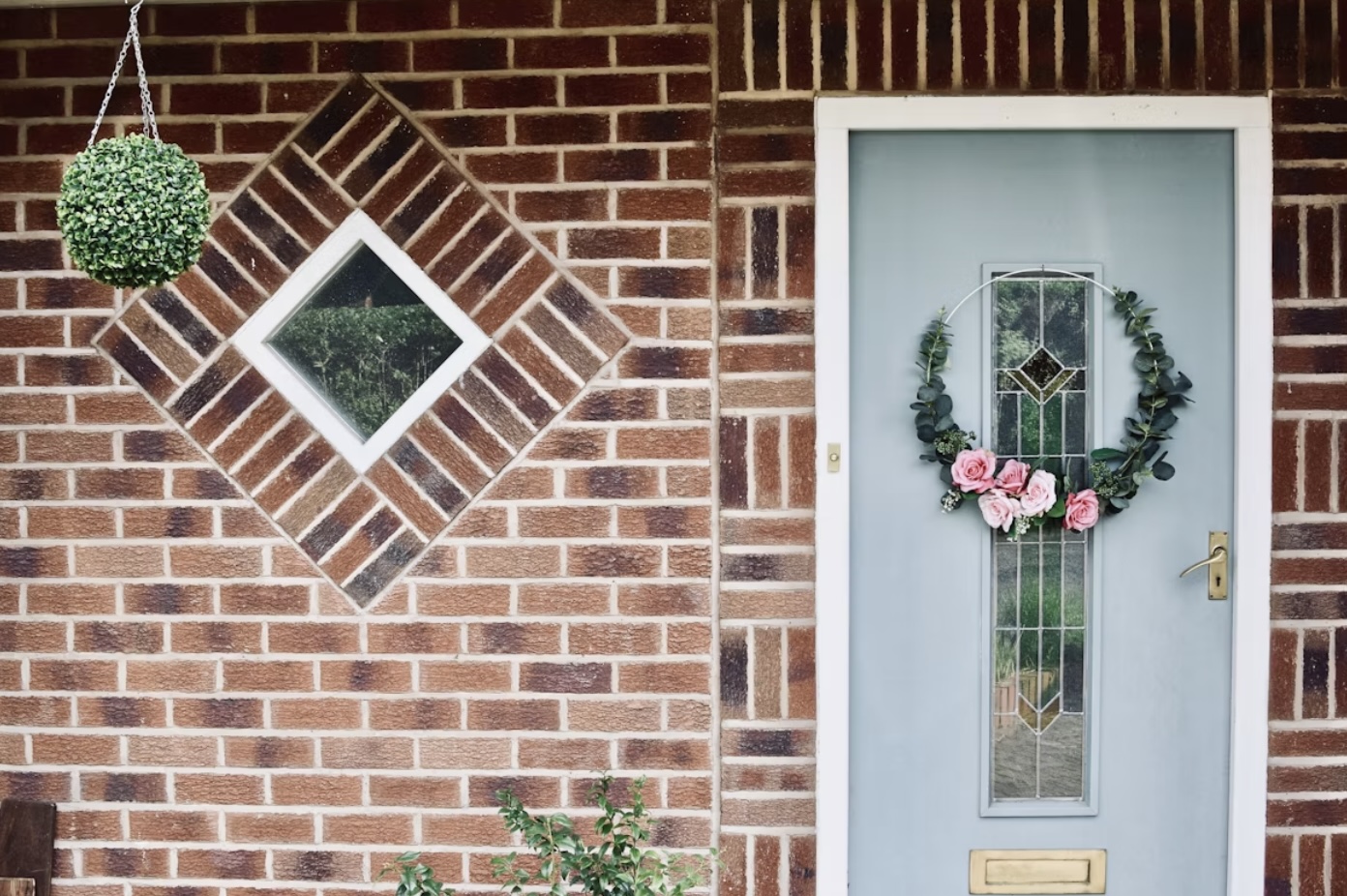
Exterior doors: building a welcoming porch display
British weather demands tough plants. A gorgeous arrangement means nothing after one November storm flattens every stem. Hardy performers thrive in UK conditions year-round, so choosing them wisely is half the battle.
Container choices that last
- Frost-proof terracotta pots – classic beside Victorian doors, typically costing £15–£40 at B&Q or local garden centres
- Zinc troughs – sleek against modern composite doors, widely available in 60 cm and 90 cm lengths
- Wooden half-barrel planters – warm alongside cottage-style timber doors, lasting 5–8 years with lining
- Glazed ceramic bowls – striking next to mid-century doors, though best moved under cover below –5°C
Symmetry matters at the front door. Two matching containers flanking the entrance – one on each side – create balance. Odd-numbered groupings (a cluster of 3 or 5 pots) suit asymmetric porches better. The RHS recommends a “thriller, filler, spiller” formula for each container: one tall focal plant, one bushy mid-height variety, and one trailing element.
Seasonal rotation without the headache
Spring calls for tulips and narcissi. Compact varieties like Tulipa “Red Riding Hood” (reaching only 20 cm) suit narrow doorsteps. Summer brings the geraniums and trailing petunias that UK gardeners know and love. Autumn demands ornamental kale, cyclamen, and heathers – all tolerant of dropping temperatures. Winter? Evergreen skimmia and hellebores carry a porch display through to March.
Switching seasonal pots 4 times a year keeps your entryway alive. Budget roughly £20–£35 per rotation for a pair of medium containers. That’s under £140 annually for year-round kerb appeal. Not bad at all.
Interior doors: bringing botanicals into the hallway
The hallway gets overlooked. Most UK hallways measure just 1.2 to 1.8 metres wide, according to NHBC build standards. Space constraints limit your plant options – but they certainly don’t eliminate them.
Low-light champions for narrow halls
Hallways near internal doors rarely receive direct sunlight. Choose plants that genuinely tolerate shade:
- Zamioculcas zamiifolia (ZZ plant) – thrives in near darkness, needs watering only every 2–3 weeks
- Aspidistra elatior (cast-iron plant) – a Victorian-era favourite, growing up to 60 cm tall
- Epipremnum aureum (pothos) – trails elegantly from a shelf above a doorframe, reaching 2 metres indoors
- Sansevieria trifasciata (snake plant) – tolerates neglect and helps freshen indoor air naturally
- Spathiphyllum (peace lily) – blooms white flowers even in low light, appreciates temperatures above 15°C
Consider the door material too. A warm oak internal door looks striking with glossy-leaved plants like a rubber tree (Ficus elastica). A white-painted panel door suits the airy feel of trailing string-of-pearls or a pale green fern. Contemporary walnut or dark-stained doors pair brilliantly with the silvery fronds of an Athyrium niponicum.
Placement tips that designers actually use
Place a single statement plant on the hinge side of an internal door – the side that stays visible when the door sits open. A tall plant on the handle side blocks movement. Common mistake. Avoid it.
Console tables offer a practical surface for cut flowers or small potted herbs. A table 25–30 cm deep fits most hallways without creating an obstacle. Fresh-cut stems in a vase add fragrance right where guests enter, and services like flower delivery in Ireland make regular fresh arrangements easy – even for friends and family across the Irish Sea.
Matching style: period homes vs. new builds
Georgian and Victorian properties in cities like Edinburgh, Bath, and Dublin feature panelled doors with fanlights. Formal symmetry suits these entrances. Two clipped bay trees in Versailles planters echo the architecture’s restraint, while lavender edging along the path reinforces the period character.
Edwardian and 1930s semi-detached homes – the UK’s most common house type, with over 4 million examples – typically feature stained-glass door panels. Avoid busy flower colours that compete with the glass. Stick to green foliage and single-tone blooms instead.
New-build homes often come with composite doors in shades of grey. These neutral tones welcome bold planting. Try vibrant crocosmia, deep purple alliums, or fiery dahlias. The contrast draws attention and prevents the “every house looks the same” effect that plagues many new estates.
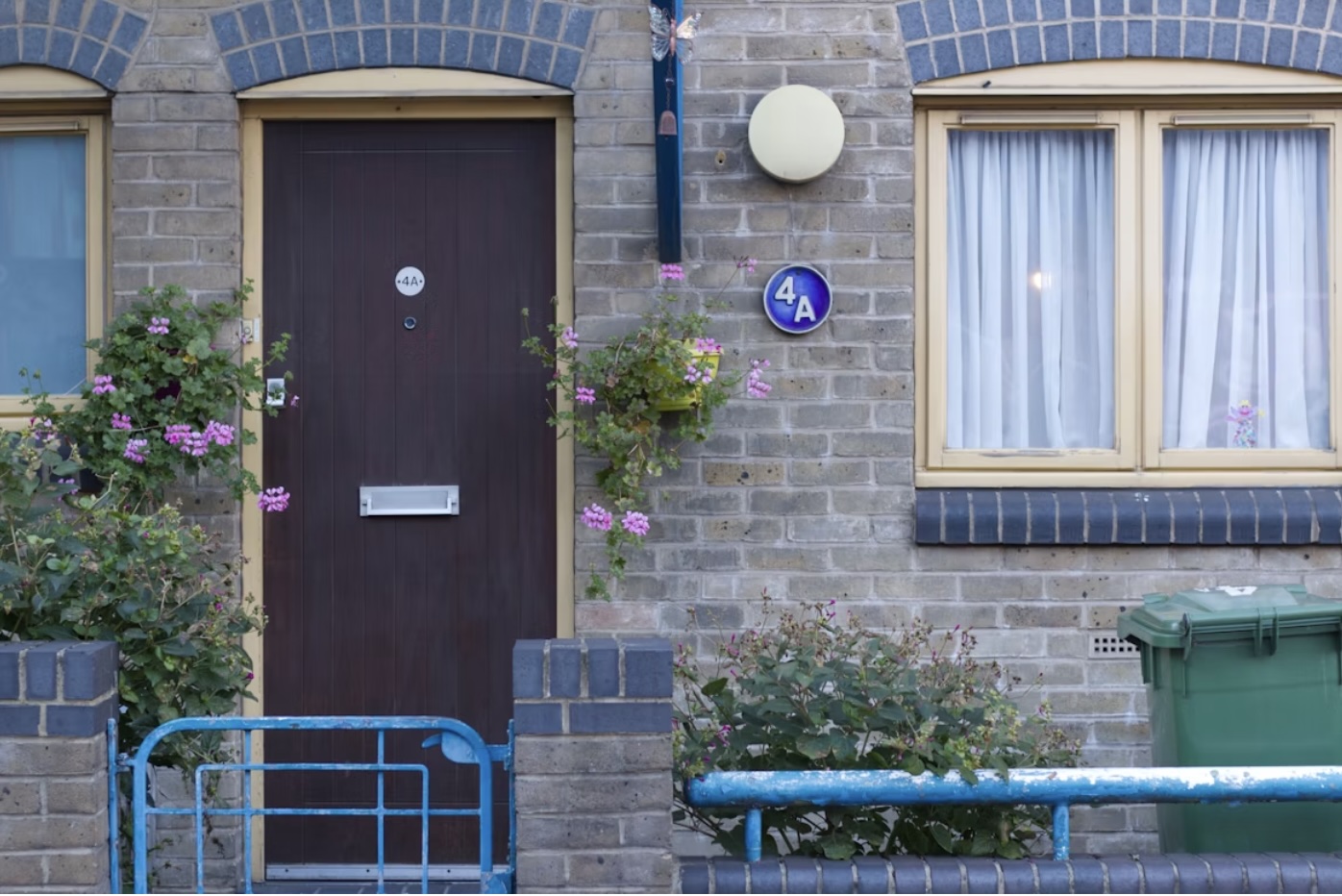
t at the doorstep: an underrated welcome
Fragrance reaches your visitor before any visual detail does. Position scented plants within 60 cm of the door threshold for maximum effect.
- Jasmine (Jasminum officinale) – flowers from June to September, suits a south-facing wall trellis beside the door
- Daphne odora “Aureomarginata” – blooms in late winter, carries scent up to 5 metres away
- Lavandula angustifolia “Hidcote” – compact at 45 cm, releases fragrance when brushed by passing feet
- Sarcococca confusa (sweet box) – an evergreen that perfumes December and January, grows well in shade
Indoors, a small pot of hyacinths on the hall table in January fills the entire corridor. Three bulbs cost under £2. The scent lasts 2–3 weeks. Hard to beat for value.
Practical care: keeping entryway plants healthy
Entryways test plants with draughts, temperature swings, and foot traffic. A few straightforward adjustments prevent the most common failures:
- Use saucers or trays beneath every pot to protect flooring – stone, tile, and wood all suffer from water marks.
- Rotate indoor plants 90 degrees fortnightly so growth stays even on the side facing away from any window.
- Feed container plants outside the front door with slow-release granules every 6 weeks from April to September.
- Check outdoor pots for waterlogging after heavy rain – drainage holes clogged by debris cause root rot within days.
- Replace tired bedding plants promptly rather than waiting for total collapse – one wilted pot drags down the whole display.
For those occasions when you want to gift fresh blooms or style a hallway arrangement quickly, exploring international flower delivery options for Ireland can save time and deliver surprising variety directly to a doorstep.
Your door deserves a botanical companion
Every door – interior or exterior – frames a transition. Plants soften that frame, add colour, introduce scent, and signal care. You don’t need a landscaping budget or a botany degree. You need one pot, one plant, and 10 minutes of thought about colour and placement.
I’d encourage you to start this weekend. Pick your front door’s dominant colour, consult the pairing table above, and grab a single container. Build from there. And next time you’re sending blooms to someone who deserves a brighter hallway – whether across town or across the water – have a look at what’s available through reliable flower delivery services covering Ireland. A well-chosen bouquet by the right door changes the feel of an entire home.