
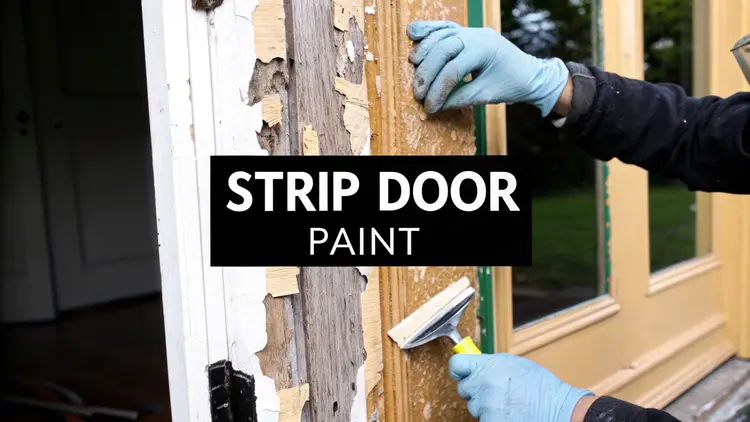
Stripping the old paint off a door is one of those truly transformative projects. But before you get to the satisfying part, you need to pick your battle. Your success hinges on choosing the right method from the get-go.
The three main ways to tackle this are with chemical strippers, a heat gun, or good old-fashioned sanding. Which one you should use depends entirely on your door’s material, the type and thickness of the paint, and what you plan to do with it afterwards. Get this first step right, and you’re on your way to a professional-looking finish.
Your Starting Point for Stripping a Painted Door
I’ve found that bringing an old door back to life is one of the most rewarding DIY jobs there is. There’s nothing quite like seeing beautiful wood grain emerge from under layers of tired, chipped paint. It can completely change the feel of a room.
But, I’ve also seen these projects turn into a real headache when people jump in without a plan. The key to avoiding that frustration is to properly understand your options before you even think about picking up a tool. This guide will walk you through the three main approaches to help you make the best choice for your specific door.
Understanding Your Options
Choosing your method isn’t just about what’s fastest; it’s about what’s most effective and, crucially, what won’t ruin your door.
For instance, if you’re working on a period door with lots of intricate mouldings and decades of caked-on paint, a chemical stripper is almost always your best bet. It gets into all those fiddly bits and does the hard work of dissolving the paint where a scraper or sander just can’t reach.
On the other hand, if you’ve got a modern, flat-panelled door with just a couple of layers of latex paint, a heat gun can be a much quicker and less messy option. The heat bubbles up the paint, making it easy to scrape away without any harsh chemicals. Finally, sanding is brilliant for getting rid of a very thin, single layer of paint or for that final, perfectly smooth finish after you’ve already used a heat gun or stripper.
Key Takeaway: The most important thing I can stress is to match the method to the door. I’ve seen people take a heat gun to delicate veneers or sand aggressively against the grain, and the damage can be irreversible. A little thought upfront saves a lot of heartache later.
Which Paint Stripping Method Is Right for You?
Here’s a quick comparison to help you decide which path to take based on your door and your project goals.
| Method | Best For | Key Advantage | Main Drawback |
|---|---|---|---|
| Chemical Stripper | Doors with intricate details, mouldings, or multiple thick layers of old paint (especially oil-based or lead). | Highly effective at getting into difficult-to-reach areas without damaging the wood’s profile. | Can be messy, smelly, and requires careful handling and good ventilation due to the chemicals involved. |
| Heat Gun | Flat-surfaced doors with fewer layers of modern (non-lead) paint. | Fast, efficient, and creates less chemical mess. Very satisfying to see the paint bubble and lift away. | Poses a fire risk if not used carefully. Can scorch the wood if held in one spot for too long. Not suitable for lead paint. |
| Sanding | Removing very thin layers of paint, or for prepping the surface for a final finish after other methods. | Provides the smoothest possible surface. It’s a straightforward process with the right tools (like an orbital sander). | Extremely dusty and time-consuming for thick paint layers. Can easily damage detailed mouldings or veneers. |
Ultimately, many projects I’ve worked on have used a combination of these methods. You might use a heat gun on the flat panels and then a chemical stripper for the detailed trim.
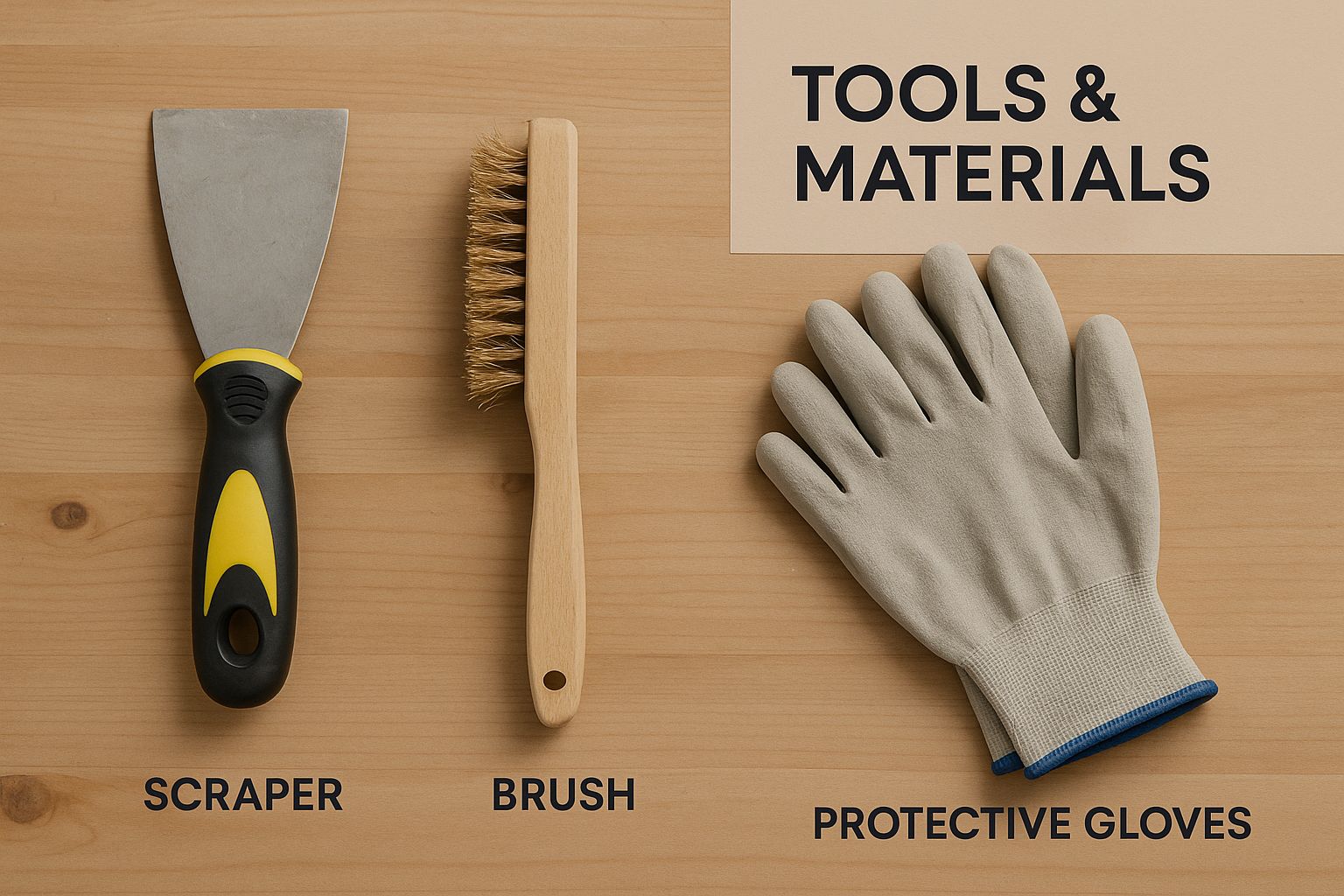
Having the right gear on hand—from a good set of scrapers and brushes to your personal protective equipment (PPE)—makes a world of difference. It turns a potential chore into a much smoother, safer, and more enjoyable project.
Right, before you even dream of slapping on chemicals or firing up a heat gun, let’s talk prep. Getting this first stage right is honestly half the battle. A rushed start almost always ends in a disappointing finish, and believe me, I’ve seen enough of them to know. Proper setup is about more than just being tidy; it’s about protecting you, your home, and making sure the door comes out looking brilliant.
First things first, get that door off its hinges. Trying to strip a door while it’s still hanging is a recipe for drips, runs, and a sore back. It’s far easier and safer to work on a flat, stable surface. Just grab a hammer and a nail set, gently tap out the hinge pins, and lift the door free. A pair of sturdy sawhorses will be your best friend here.
With the door resting on the sawhorses, your next job is to take off every last piece of hardware. I’m talking handles, locks, latches, faceplates, and the hinges themselves. Pop everything into a labelled bag so you don’t lose a single screw. Trust me, trying to work around these bits and bobs will slow you down and leave you with a messy, uneven result every single time.
Creating a Safe Work Zone
Your choice of workspace is absolutely critical, especially if you’re using methods that kick up dust or fumes. A garage with the main door wide open, a well-aired workshop, or even a spot outdoors on a calm day are all great choices. Good airflow is non-negotiable when you’re dealing with chemical strippers or a heat gun.
To protect whatever is underneath your sawhorses, lay down some heavy-duty dust sheets. I always opt for canvas over those thin plastic sheets – they’re much less likely to rip and you can reuse them for countless projects. Getting the prep right is a hallmark of both keen DIYers and the pros in the UK’s painting and decorating sector. It’s a massive industry, with a revenue of around £4.4 billion, partly driven by homeowners tackling jobs just like this to look after our older housing stock. You can get a deeper look at these industry trends from sources like IBISWorld.
Crucial Safety Check: Before you go any further, you absolutely must test for lead paint, particularly if your home was built before the 1980s. You can pick up cheap lead test kits from any DIY shop. If it comes back positive, stop. Do not proceed. Sanding or heating lead paint releases incredibly toxic dust and fumes, which is a serious health hazard.
Your Essential Prep Checklist
Once your safe zone is sorted, run through this final checklist. Having everything in its place before you start makes the actual stripping process feel so much smoother and more controlled.
- Door Placement: Is the door sitting securely on the sawhorses? Make sure it’s at a height that’s comfortable for you to work on.
- Hardware Removed: Give it a quick double-check. Are all the metal bits off the door and stored somewhere safe?
- Floor Protection: Your dust sheets should extend well beyond the door’s footprint to catch any spills, drips, or flakes of old paint.
- Lead Test Complete: Have you confirmed the paint is lead-free and you can safely move forward with your chosen method?
- Ventilation Sorted: Are the windows and doors open? You want a steady cross-breeze flowing through your workspace.
Nailing these foundational steps transforms what could be a messy headache into a controlled, manageable project. Now you’re properly ready to get that old paint off.
Using Chemical Strippers for Detailed Work
When you’re staring down a door that’s seen more coats of paint than you’ve had hot dinners, or one with lovely but fiddly mouldings, chemical strippers are your secret weapon. Sanding and heat guns often struggle with those intricate profiles, but a decent chemical stripper gets right in there, dissolving multiple layers at once and saving your sanity. The real trick is picking the right product for the job and using it properly to get a great finish without harming the wood.
The world of paint strippers is changing for the better. We’re moving away from the old-school, potent solvent strippers that contained methylene chloride due to serious health and environmental concerns. This shift is part of a bigger trend; the global paint stripper market is expected to grow by 4.4% annually through to 2032, largely because we all want safer, bio-based options. For us in the UK, this means more citrus-based or less aggressive caustic strippers on the shelves. They’re much safer to have around the house, though you might need to give them a bit more time to work their magic. You can read more about the trends in the paint stripper market on Fact.MR.
Applying the Stripper for Maximum Effect
Now, this is no time to be timid. Success with chemical strippers comes down to a thick, generous application. You want to slop it on, aiming for a layer that’s at least 2-3mm thick all over. I grab an old, cheap paintbrush and dab or plaster it on, rather than brushing it out like you would with paint. Think of it as creating a wet blanket that keeps the chemicals in contact with the paint so they can do their job.
Once it’s on, a great tip is to cover the whole thing with plastic sheeting or even just some cling film. This simple step is a game-changer. It stops the stripper from drying out, which gives it the maximum time to penetrate and break down every single layer of paint. You’ll need a bit of patience here. Always check the manufacturer’s instructions, but for really stubborn, thick paint, you might be looking at leaving it for several hours, or sometimes even overnight.
Pro Tip: You’ll know it’s ready when the paint surface looks wrinkled and bubbled, a bit like wet porridge. Scrape a small test patch. If you see clean wood underneath, it’s go-time.
Scraping Techniques for a Clean Finish
This is the really satisfying bit. Once the stripper has worked its magic, you get to scrape away all that gunk. For the big, flat parts of the door, a good, firm, flat-bladed scraper is your best friend. Hold it at a low angle to the wood and use firm, steady pressure to push the mess away, revealing the beautiful grain underneath.
Getting into those detailed mouldings and grooves, however, requires a more delicate touch and a few extra tools. I always have a little collection ready to go.
- Medium-Grade Wire Wool: Absolutely brilliant for curved profiles. Dip a pad of wire wool into the gunk and use it to scrub the details clean.
- Old Toothbrushes: Perfect for getting right into tight corners and crevices where a scraper can’t reach.
- Dental Picks or Skewers: When you’ve got really stubborn flecks of paint in the sharpest corners of the mouldings, these are ideal for carefully teasing them out.
Whatever you’re using, always try to work with the grain of the wood to avoid scratching the surface. It’s also a messy job, so keep a bucket or a sturdy cardboard box handy to scrape all the gooey paint sludge into for easy disposal.
Finally, after all the scraping is done, you’ll need to neutralise the wood. This removes any chemical residue. Usually, this means wiping the surface down with white spirit, but check the stripper’s packaging as some recommend a specific neutralising product. Once that’s done, you’re ready for a final light sand and the finish of your choice.
Applying Heat to Remove Old Paint
If you’re staring down a flat-panelled door that’s been slathered in layers of modern, non-lead paint, a heat gun might just be your new best friend. I’ve found this method is often quicker and certainly less messy than wrestling with chemical strippers. The idea is wonderfully simple: the heat gun softens and blisters the old paint, letting you lift it away with a scraper. Trust me, it’s a very satisfying process.
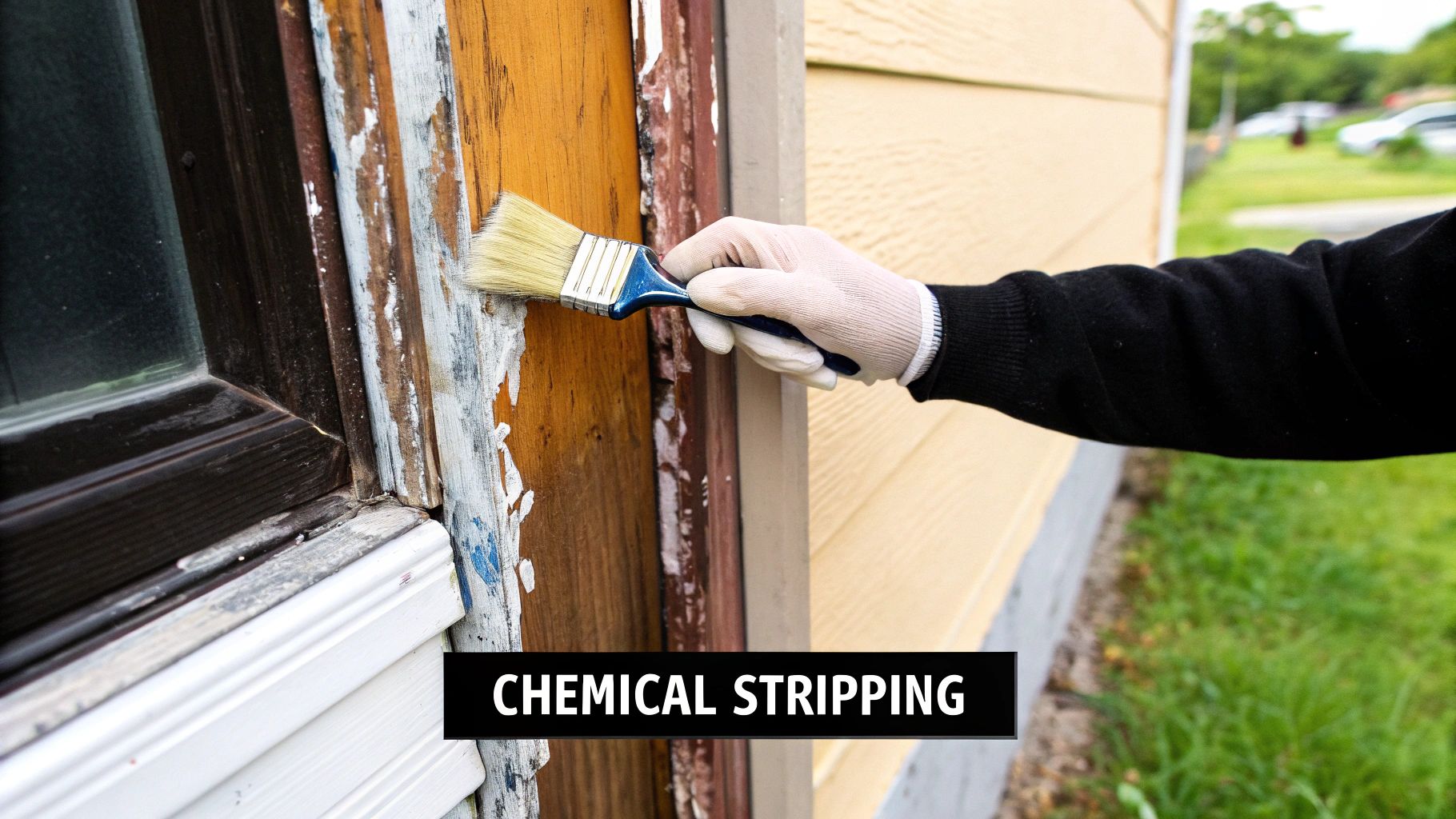
But, and this is a big but, this technique demands your full attention. Heat guns are powerful bits of kit that can easily get hot enough to scorch the wood underneath or, in a worst-case scenario, start a fire. Success here is all about finding that sweet spot—the perfect balance of heat and movement.
Mastering the Technique
Grab your heat gun and start it on a medium setting. You can always dial up the temperature if you need to, but going in too hot from the get-go is a surefire way to damage the wood. Hold the nozzle about 15-20cm (6-8 inches) from the door’s surface and, this is key, keep it moving in a slow, constant sweeping motion. Never let it linger in one spot.
As you guide the heat gun with one hand, follow just behind it with a stiff, metal scraper in the other. You’ll see the paint start to bubble and lift, which is your cue to peel it away in lovely, long sheets. If the paint gets gummy and refuses to budge, it needs a little more heat. On the other hand, if you smell burning wood or see dark scorch marks appearing, you’re either too close or moving too slowly.
Crucial Safety Warning: Never, ever use a heat gun on a door if you even suspect it might have lead paint. The intense heat will vaporise the lead, releasing highly toxic fumes into the air that are incredibly dangerous to breathe in. Always test for lead first.
For the best results, you’ll want to pair your technique with the right scraper. A nice flat, wide blade is brilliant for the large, open areas, but you’ll need a shavehook or a shaped scraper to properly get into the mouldings, curves, or corners.
Key Safety and Best Practices
Working with high temperatures demands respect and a sensible setup. I’ve seen even seasoned DIYers get complacent, so please always put safety first.
- Ventilation is Essential: Always work in a well-ventilated area. An open garage with the door up or, even better, working outside is ideal for letting any fumes disperse safely.
- Keep Water Nearby: Have a bucket of water or a fire extinguisher within arm’s reach at all times. It’s a simple precaution against any accidental smouldering or sparks.
- Protect Yourself: Wear a pair of thick, heat-resistant gloves. They’ll protect your hands from both the hot tool and the scalding paint scrapings. Safety goggles are non-negotiable, too.
- Handle Stubborn Spots: For those really stubborn patches where paint just won’t lift, resist the temptation to just crank up the heat and hold the gun still. A bit of extra elbow grease with the scraper or a quick pass with a detail sander is a much safer bet.
By using a smooth, continuous motion and staying vigilant, a heat gun can make short work of a pretty daunting task, leaving you with a clean, prepped surface that’s ready for the next stage.
When and How to Sand a Door
Sanding is a non-negotiable part of stripping paint from a door. You might use it as your primary weapon, or as the final finesse after bringing in the chemical or heat-based big guns. It’s the perfect method for tackling a single, thin layer of paint or simply for smoothing the wood to a beautiful finish, getting it ready for a fresh coat or a lovely stain.
Deciding between sanding by hand and letting an electric sander do the heavy lifting really comes down to the job at hand and how much detail work is involved.
There’s no doubt that sanding by hand gives you incredible control, which is just what you need for delicate bits or those tricky curved profiles. But for the big, flat panels? An electric sander is an absolute game-changer. It saves a massive amount of time and elbow grease, making the whole job feel much less of a chore.
We’re quite lucky in the UK with our brilliant coatings industry. In fact, three out of every four cans of paint sold here are made right on our doorstep. This means we have fantastic access to a huge range of abrasives and other paint removal supplies. You can get a better sense of the UK coatings industry and its manufacturing scale and what that means for us DIYers.
Choosing Your Sander and Sandpaper Grit
For most door-stripping projects I’ve tackled, an electric orbital sander has been my go-to tool. Its random, circular sanding pattern is brilliant for avoiding those tell-tale swirl marks in the wood grain that can ruin a finish. For the fiddly bits, like intricate mouldings or tight corners where the orbital sander just can’t squeeze in, a detail sander (often called a “mouse” sander) is worth its weight in gold.
Now, the real secret to a great sanding job is working your way through the sandpaper grits. It’s a process.
- Coarse Grit (60-80): This is where you start when you’re stripping off old paint. It’s aggressive and makes short work of the bulk of the old finish.
- Medium Grit (100-120): Once the paint is gone, switch to this. It’ll smooth out the scratches left behind by the coarser paper.
- Fine Grit (180-220): This is your finishing touch. A once-over with this grit polishes the wood surface, leaving it perfectly smooth and ready for whatever you’re applying next.
Whatever you do, don’t jump straight to a fine grit when there’s still paint on the door. You’ll just clog the paper instantly and get absolutely nowhere. Always start coarse and work your way up—it’s the fastest and most effective way.
My Personal Tip: When you’re sanding, let the tool do the work. Leaning on it with all your weight won’t make it go faster; it’ll just gouge the wood and create ugly, uneven patches. A light, steady hand is all it takes to get a professional-looking finish.
Sanding Technique and Dust Management
If you remember one thing about sanding, make it this: always move with the grain of the wood. If you sand across the grain, you’ll tear the wood fibres and create a mess of scratches that are a nightmare to get rid of later. Follow the natural lines of the wood, and you’ll get a clean, professional result every time.
Managing the dust isn’t just about keeping your workspace tidy; it’s a critical safety step. The fine dust that sanding kicks up can be nasty if you breathe it in.
- Mask Up: Always, always wear a good quality dust mask. I recommend one rated FFP2 or FFP3.
- Use Extraction: If your sander has a dust extraction port, hook it up to a workshop vacuum. This is the single best way to catch the majority of the dust right at the source.
- Wipe Down: After you’ve finished sanding, grab a tack cloth or a rag lightly dampened with white spirit. Give the entire door a thorough wipe-down to remove any lingering dust particles before you even think about reaching for your primer, paint, or stain.
Common Questions About Stripping a Door
Even with the best-laid plans, a project like stripping a door is bound to throw a few curveballs your way. I’ve been there. Having the right answers ready can be the difference between a job you’re proud of and a real headache. Let’s tackle some of the most common questions I hear, so you can get the best possible result.
A bit of know-how upfront can save you a world of pain later. So many people jump straight in, only to discover the paint they’re tackling or the door itself isn’t right for the method they’ve chosen.
How Can I Tell If My Door Has Lead Paint?
This is the most critical question. If your house was built before the 1980s, you have to work on the assumption that there’s lead in the paint until proven otherwise. It’s a serious health hazard, but finding out is simple. Grab an inexpensive lead paint test kit from any good DIY shop.
If that test shows a positive result, stop. Your plan needs to change completely for safety’s sake. Do not try to strip this paint yourself using any method that creates dust (like sanding) or toxic fumes (like a heat gun). Your safest routes are either to bring in a certified professional for lead paint abatement or to encapsulate the hazard by cleaning, priming, and painting over the existing surface.
Can I Strip a Veneered or Hollow-Core Door?
Honestly, I wouldn’t recommend it. It’s a recipe for disaster. Veneered doors are only covered with a paper-thin layer of real wood. It is incredibly easy to sand right through it or gouge it with a scraper, which permanently ruins the door.
Hollow-core doors are even less suitable for stripping. Their surface is usually a composite material or even a printed-on, faux-wood grain. It simply can’t be stripped back like proper timber. All the stripping methods we’ve discussed are designed for solid wood doors only.
A quick check can save you a lot of trouble. Tapping on the door is a simple test. A hollow-core door will sound empty and light, whereas a solid wood door will feel heavy and produce a dull, solid thud.
What Is the Best Way to Finish My Door After Stripping?
With the hard work of stripping done, this is the fun part where you bring the door back to life. First things first, get it perfectly clean. A thorough wipe-down with a tack cloth or a rag lightly dampened with white spirit will pick up every last bit of dust.
After that, how you finish it is all about the look you’re after.
- For a classic, natural wood look: Apply a quality wood stain to really make the grain pop. Follow it up with at least two coats of a clear polyurethane varnish to protect it.
- For a soft, matte feel: I’m a big fan of using wood oils like Danish or Tung oil. They soak into the wood to protect it from the inside out, leaving a beautiful, low-sheen finish that feels great to the touch.
- If you plan to repaint: A good quality wood primer is non-negotiable. It gives your topcoats something to grip onto and creates a uniform base for a flawless, even colour.
How Do I Handle Detailed Areas Like Mouldings?
Patience is your best friend when it comes to the fiddly bits. For those intricate mouldings and grooves, you just need to switch up your tools and tactics.
If you’re using chemical strippers, grab a small wire brush or even an old toothbrush to work the product into the details and scrub the softened paint out. For really stubborn bits in tight corners, pointed scraping tools or even wooden BBQ skewers work wonders. When using a heat gun, a shaped scraper like a shavehook is a must-have. And for sanding, your best bet is to work by hand with folded sandpaper or a multi-tool with a detail sanding attachment. It’s this careful, methodical work that really separates a DIY job from a professional finish.
At Doors Delivered, we believe a beautiful door is the perfect starting point for any great space. Whether you’re a homeowner tackling a DIY project or a trade professional managing a large development, we provide high-quality internal doors and accessories to suit any style. Discover our curated range, from sleek invisible doors to timeless classics, all backed by expert support and nationwide UK delivery. Find the perfect foundation for your project at Doors Delivered.