
When you’re figuring out the budget for a pocket door, it helps to think of it like buying a car. The base model—a simple kit fitted into a brand new stud wall—is the most affordable option. But once you start adding premium features like a solid oak door or a soft-close mechanism, or if you’re dealing with a tricky installation in a load-bearing brick wall, the price naturally climbs.
The typical pocket door installation cost in the UK falls somewhere between £400 and £2,700, with a common middle ground around the £1,500 mark. The final figure on your invoice is a blend of the pocket system itself, the door slab you choose, the cost of professional labour, and any structural prep work that needs doing.
Your Pocket Door Cost at a Glance
So, what really drives that price up or down? I’ve been in this business long enough to see that the biggest factor, by a country mile, is whether you’re working with a new build or trying to fit a pocket door into an existing wall.
- New Build Installation: This is the dream scenario. It’s the most straightforward and budget-friendly way to get a pocket door. The wall is literally built around the pocket frame, which keeps the labour time and mess to an absolute minimum.
- Retrofit Installation: This is where things get a bit more involved. Putting a pocket door into a wall that’s already there means careful demolition, creating the cavity from scratch, and then putting it all back together again. As you can imagine, that extra work bumps up the labour costs significantly.
To give you a clearer picture, here’s a quick breakdown of what you might expect to pay for different types of jobs.
Estimated Pocket Door Installation Costs
The table below summarises the typical cost ranges for various pocket door installation projects across the UK, including both materials and labour.
| Installation Scenario | Estimated Cost Range (Labour & Materials) |
|---|---|
| Simple DIY Kit (No Labour) | £150 – £400+ |
| New Build (Standard Door & Kit) | £400 – £900 |
| Retrofit into Stud Wall (Standard Door) | £950 – £1,700 |
| Retrofit into Masonry Wall (Complex) | £1,800 – £2,700+ |
| High-End (Bespoke Door, Soft-Close etc.) | £2,500+ |
As you can see, the complexity of the job is the real story here. A simple job in a new build is one thing; tackling a solid brick wall in an older home is a different beast entirely.
The total pocket door installation cost varies widely based on project complexity. In the UK, professional installation ranges from £400 for simple new builds to over £2,700 for challenging retrofits in existing homes. You can explore more detailed cost breakdowns to understand these figures better.
This overview should give you a solid financial starting point. Now, let’s dig into each of these costs in more detail so you can build a realistic budget and avoid any surprises down the line.
When you get a quote for a pocket door, it’s helpful to understand exactly what you’re paying for. Think of it like a restaurant bill – you’re not just paying for the meal on your plate, but the quality ingredients, the chef’s skill, and the service. It’s the same idea here. The total pocket door installation cost is a sum of its parts, and your quote is built on three main pillars.
The big three are the pocket door kit itself, the door slab (that’s the actual door), and the professional labour to fit it all perfectly. Each of these comes with its own price tag, and the choices you make for each one will steer the final cost. Let’s get into the specifics of what you’re buying.
The Pocket Door Kit
The kit is the unsung hero of the whole setup. It’s the metal frame and track system that gets hidden away inside your wall, allowing the door to glide smoothly out of sight. You can get basic, functional kits that do the job well, but there are also premium upgrades available that really elevate the experience.
One of the most popular upgrades is a soft-close mechanism. This clever feature stops the door from slamming shut, giving it a quiet, controlled close that feels incredibly luxurious. It might add £50 to £150 to the kit’s price, but many homeowners I’ve spoken to feel the gentle, refined action is well worth the investment.
The Door Slab
Next up is the door itself, which in the trade we call the “door slab.” This is the visible part you’ll be looking at and using every day, so its style and material are key. The cost can swing wildly depending on what you go for.
- Hollow-Core Doors: These are the most budget-friendly choice. They’re lightweight and ideal for standard rooms where top-tier soundproofing isn’t a priority.
- Solid-Core Doors: A step up in quality, these doors are much heavier and denser, offering significantly better sound and heat insulation. They feel more substantial and are a very popular mid-range option.
- Solid Wood or Glass Doors: For a truly premium finish, you can’t beat solid wood (like a beautiful oak or walnut) or doors with large glass panels. They look fantastic but are heavier and pricier, so they need a heavy-duty kit to handle the extra weight.
Professional Labour Costs
Finally, we have the labour. Getting a flawless, smooth-running pocket door absolutely requires a skilled carpenter or joiner. Their hourly or day rates will depend on your location in the UK—with London and the Southeast usually being more expensive—and how complex the job is. For example, the type of door frames involved can influence the difficulty. Installing a kit into a new-build stud wall is relatively straightforward, but fitting one into a solid brick wall is a much bigger job that takes more time, specialist tools, and a higher level of expertise.
New Build Vs Retrofit Installations
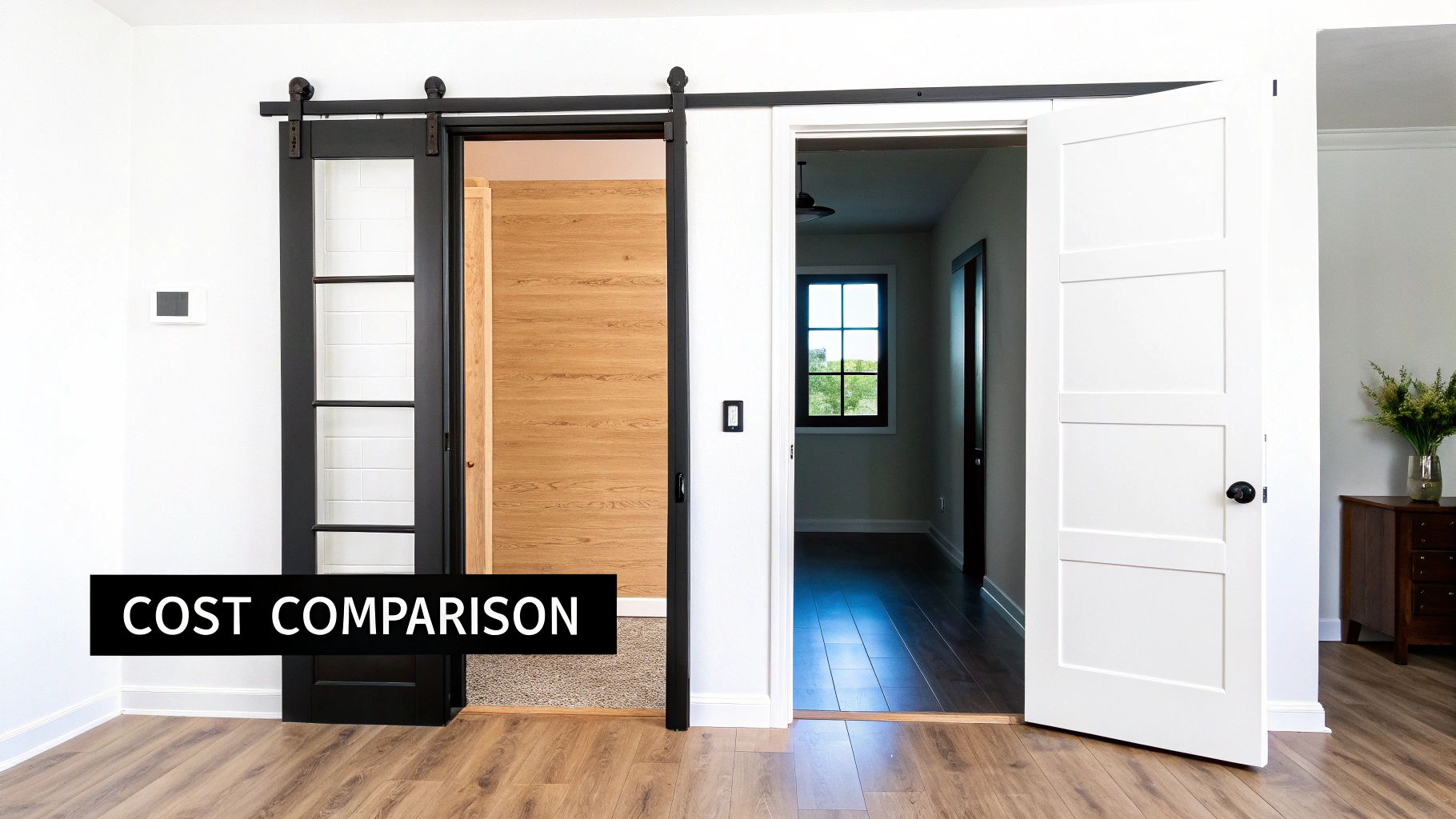
Without a doubt, the single biggest factor that sways your total pocket door installation cost is the starting point of the project. Are you putting a door into a brand-new wall, or are you adapting an existing one? The difference here isn’t just a minor detail—it fundamentally changes the scope, complexity, and price of the whole job.
Think of a new build installation like drawing on a blank canvas. The wall isn’t even there yet, which means your joiner can build the studwork from scratch, perfectly accommodating the pocket door cassette. This approach is efficient, creates very little mess, and requires far fewer hours of labour, keeping costs right down.
Retrofitting, on the other hand, is a bit more like performing keyhole surgery on your home. It’s a delicate, far more labour-intensive process.
The Retrofit Challenge
When you retrofit a pocket door, the existing wall has to be carefully opened up. This isn’t just a case of cutting a rough hole; it’s a precise deconstruction job. The joiner has to strip back the plasterboard on one or both sides to get to the internal studs and carve out the cavity where the door will eventually slide.
This is where the costs can start to climb, as you never quite know what you’ll find inside a wall. Hidden surprises are common and must be dealt with before the installation can even begin.
- Electrical Wiring: It’s very common to find that sockets, light switches, and all their wiring are running right through the space you need. An electrician will have to be called in to safely reroute everything.
- Plumbing Pipes: In bathrooms, kitchens, or en-suites, you might discover water supply or waste pipes tucked inside the wall cavity. This means getting a plumber involved to move them out of the way.
- Structural Integrity: If it turns out the wall is load-bearing, the job gets a lot more serious. You can’t just cut an opening. You may need to consult a structural engineer, and a new, correctly sized lintel will have to be installed to support the weight from above.
The complexity of a retrofit project means labour costs are inherently higher. A professional must not only install the kit but also manage demolition, potential rerouting of services, and the final reconstruction and finishing of the wall.
Comparing the Financial Impact
The financial gap between these two approaches can be pretty significant. Looking at the data, costs vary widely, especially when comparing a straightforward DIY job to a professional installation. For instance, a basic DIY single door setup might set you back around £692, but a professional installation of a double pocket door system—a classic retrofit project—can easily climb to approximately £2,360 because of all the extra work. You can get a deeper look into how these complexities affect the numbers by reading about the real costs of fitting a pocket door.
Ultimately, a new build gives you a predictable, controlled environment that translates to lower labour fees. A retrofit is more of a journey into the unknown, where the extra time and skill needed for demolition, problem-solving, and making good are all reflected in the final bill.
Of course, here is the rewritten section, crafted to sound like an experienced human expert while adhering to all your requirements.
Budgeting for Hidden Project Costs
Let’s be honest, the initial quote you get for your pocket door installation cost is just the starting point. I’ve seen it time and time again: a homeowner gets a price, but they haven’t accounted for the little surprises that often pop up in a renovation. Think of it like restoring an old house; you budget for the new kitchen, but you also need a pot of money set aside for the dodgy wiring you might find when you pull back the plaster.
These aren’t “hidden” costs because your builder is trying to pull a fast one. They’re simply the unknowns that can’t be priced until the wall is opened up. Facing these possibilities head-on is the best way to keep your project on track and avoid the stress of a blown budget. Let’s walk through the usual suspects.
Structural and Utility Adjustments
The biggest potential for extra costs is lurking right inside your wall. Once that plasterboard comes down, you might find a few things that need sorting by specialist trades before your joiner can even think about fitting the pocket door kit.
- Load-Bearing Walls: This is the big one. If your wall is holding up the floor above, you can’t just hack a big hole in it. You’ll need a structural engineer to do the calculations and specify the right kind of lintel to take the weight. The report and the heavy-duty beam itself can easily add £300 to £700+ to the job.
- Rerouting Electrics: Sockets, light switches, and all the wiring that goes with them are very common obstacles. You’ll need an electrician to make everything safe and move it out of the way, which typically costs between £150 and £300, sometimes more if it’s a complicated job.
- Moving Plumbing: If you’re putting a pocket door into a kitchen, utility, or bathroom wall, there’s a good chance you’ll find pipework right where the door needs to slide. Getting a qualified plumber in to reroute water or waste pipes can add another £200 to £500 or more to the final bill.
In my experience, setting aside a contingency fund of 15-20% of your initial quote is the smartest move you can make. This buffer means that if you do uncover a stray wire or need a last-minute structural report, it’s just a manageable task, not a full-blown budget crisis.
Finishing and Final Touches
Right, the pocket door kit is in, and the wall is boarded up. Job done? Not quite. The final stage is all about making the new wall look like it was always there, and these finishing touches have their own costs that are easy to overlook.
The new plasterboard will need to be skimmed to create a smooth, seamless surface that blends with the rest of the wall. Then it’s priming and painting. You’ll also need new architrave to frame the opening beautifully. All in, these finishing jobs can easily tack on another £250 to £600 for the materials and labour.
To help you anticipate these potential add-ons, here’s a quick checklist of things to keep in mind.
Potential Hidden Costs Checklist
| Potential Cost Item | Typical Price Impact | Notes |
|---|---|---|
| Structural Engineer Report | £300 – £700+ | Essential for load-bearing walls. Includes the report and the specified lintel. |
| Electrician for Rerouting | £150 – £300 | To move sockets, switches, or wiring that are in the way. |
| Plumber for Rerouting | £200 – £500+ | For moving water or waste pipes in kitchens and bathrooms. |
| Plastering/Skimming | £150 – £300 | To create a smooth, paint-ready surface on the new wall section. |
| Painting and Decorating | £100 – £300 | Includes primer, paint, and labour to finish the wall. |
| New Architrave | £50 – £150 | For framing the new opening (materials and fitting). |
| Upgraded Door Furniture | £20 – £100+ | Cost for higher-end recessed handles and privacy locks. |
| Waste Removal/Skip Hire | £50 – £200 | Disposing of old plasterboard, timber, and other debris. |
This checklist isn’t meant to scare you, but to prepare you. Thinking about these items from the start is the key to a realistic budget and a much smoother project.
Lastly, don’t forget the door furniture! The recessed handles, privacy locks, and other hardware are almost always bought separately. A basic flush pull might only be £15, but a beautiful designer set could set you back £100 or more. It’s these small details that complete the look, but they absolutely need to be factored into your pocket door installation cost from day one.
Finding the Right Professional for the Job
Choosing the right person to fit your pocket door is every bit as crucial as picking the door kit itself. A skilled pro makes sure the job is done right the first time, preventing those nightmare issues like sticking or misalignment that are a real pain to fix once the wall is plastered and painted. A shoddy installation can turn your stylish space-saver into a daily headache.
Think of it like this: you wouldn’t ask a general mechanic to rebuild a classic car’s engine; you’d find a specialist who lives and breathes that specific model. The same logic applies here. You’re looking for a carpenter or joiner with genuine, hands-on experience fitting pocket door systems. They know just how precise the work needs to be.
Vetting Your Tradesperson
Start your search on trusted trade websites or, even better, by asking for local recommendations. Once you’ve got a shortlist, it’s time to ask the right questions to suss out their expertise and make sure you’re protected. A true professional will have no problem answering.
- Pocket Door Experience: Don’t be shy. Ask them directly, “How many pocket doors have you installed in the past year?” Their answer will tell you a lot about their familiarity with the unique quirks of these systems.
- Insurance Coverage: This is a non-negotiable. Always confirm they have Public Liability Insurance. It protects you and your home if something unexpectedly goes wrong during the job.
- Viewing Past Work: Ask if they have a portfolio or some photos of previous pocket door projects. Seeing their finished work is a fantastic way to judge their skill and attention to detail.
A key sign of a reputable professional is the quality of their quote. If someone just scribbles a single number on a scrap of paper, walk away. A proper quote is an itemised breakdown that shows you exactly where your money is going.
How to Compare Quotes Effectively
When you get quotes, resist the urge to just scan for the lowest number at the bottom. A professional quote will clearly separate the different parts of the pocket door installation cost, making it easy to understand. It should include:
- Labour Costs: This should specify a day rate or a fixed price for the entire job.
- Materials Cost: This covers everything from the door and kit to plasterboard, timber, and any other necessary building materials.
- Contingencies: A really thorough quote might even mention potential extra costs, like rerouting wires. This shows they’ve actually thought through the complexities of your specific project.
- VAT: Make sure it’s crystal clear whether VAT is included in the final price.
By comparing these itemised lists, you can spot if one tradesperson is marking up materials significantly or if another’s labour rate is much higher. This lets you make a smart decision based on real value, not just the cheapest price. Seeing a visual example of a complete pocket door kit can also help you understand what should be listed in the materials section of your quote.
Common Pocket Door Cost Questions Answered
Even with a solid plan, it’s completely normal to have a few more questions rattling around. Every home is different, and every project has its own quirks, so it pays to think through the “what-ifs” before you start. I’ve pulled together the most common questions I get from homeowners to give you that final bit of clarity.
Think of this as our final chat before the work begins, where we tackle those last-minute queries. We’ll get into the risks of DIY, the cost of a grand double-door entrance, and how the very wall you’re working on can shift the budget.
Can I Install a Pocket Door Myself to Save Money?
On paper, going the DIY route looks like a great way to shave a few hundred pounds off the final bill. I get the appeal. But this is one of those jobs where experience really, really matters, and a tiny mistake can snowball into a massive headache. The real challenge isn’t just cutting a hole in the wall; it’s building a pocket that is perfectly plumb and level.
If that frame is off by even a few millimetres, your door will catch, scrape, and jam—becoming a daily frustration. Even worse, you could accidentally slice into hidden water pipes, live wiring, or, most seriously, compromise a structural part of your home. Believe me, the cost of calling in a pro to fix a botched DIY job is always much higher than just hiring them to do it right the first time. For a smooth, silent door you’ll love for years, I always recommend bringing in a professional.
How Much More Does a Double Pocket Door Cost?
There’s no denying it—a double pocket door creates a stunning, grand entrance that can transform two rooms. But that grandeur comes at a price. As a rough guide, you can expect a double pocket door system to cost anywhere from 1.5 to 2.5 times more than a single one.
So, why the big jump in price?
- Two Doors, Two Kits: It’s not just about buying two door slabs. You need a much larger and more complex pocket door kit engineered to handle both doors moving in unison.
- Serious Wall Work: The opening needed is obviously much wider. This almost always means installing a new, longer, and stronger lintel above the opening to carry the weight of the wall.
- Precision is Everything: Getting two doors to meet perfectly in the middle with no awkward gaps requires a huge amount of skill and precision. It simply takes the installer more time to get it spot-on.
When you add it all up, a double door installation is a much more significant project and investment.
Does the Wall Type Change the Installation Cost?
Yes, absolutely. The material your wall is made of is one of the single biggest factors that can swing the final price. A standard plasterboard stud wall is the dream scenario—it’s the easiest and cheapest to work with. A joiner can cut away the plasterboard, tweak the timber studs, and get the frame in relatively quickly.
Things get trickier—and more expensive—if you’re dealing with a solid brick or blockwork wall. Carving a clean channel into solid masonry is a different beast entirely. It demands specialist tools, like a wall chaser, and is a much slower, dustier, and more labour-intensive job.
But the most critical factor, no matter the wall type, is whether it’s load-bearing. If that wall is holding up the floor or roof above, you absolutely cannot touch it without getting a structural engineer involved. This will add costs for a professional assessment and the installation of a proper steel or concrete lintel to keep your home safe and sound. A visual inspection of available door handles and knobs can also help you budget for the final finishing touches.
At Doors Delivered, we provide high-quality pocket door systems and all the accessories you need for a flawless installation. Explore our extensive range to find the perfect solution for your project at Doors Delivered.