
What Is a Rebated Door Explained for Homeowners
Let’s get right to it. A rebated door isn’t just a standard door; it has a clever design feature – a specially grooved edge, or a ‘rebate’, that lets it slot perfectly into the door frame or against another door. This simple tweak eliminates the usual gap, creating a far superior seal.
What Is a Rebated Door and How Does It Work
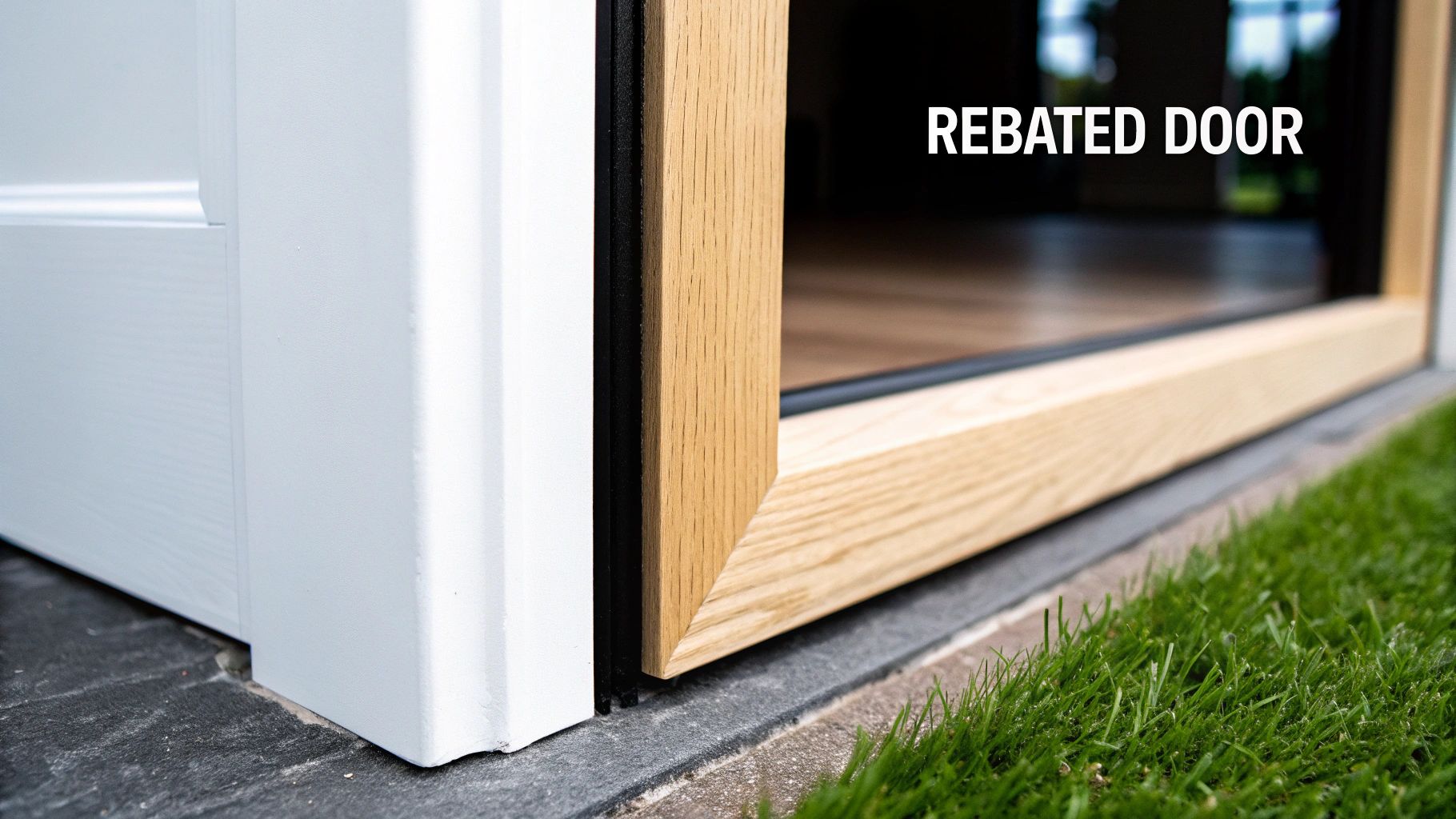
Think of it like this: if you push two flat-edged blocks together, you’ll always see a fine line where they meet. Now, imagine those blocks had overlapping edges that clicked together without a seam. That’s the core idea behind a rebated door. The ‘rebate’ is simply a step or channel cut into the edge of the door.
When you close it, this rebated edge overlaps with the frame or, if it’s a pair of double doors, with the edge of its partner. It’s this interlocking fit that makes all the difference. Instead of two flat surfaces just butting up against each other, the rebate creates a more secure, layered connection—a technique rooted in traditional joinery that’s just as useful in today’s homes.
To help you quickly grasp the key points, here’s a simple breakdown of what makes a rebated door stand out.
Rebated Door at a Glance
| Feature | Benefit |
|---|---|
| Interlocking Edge | Creates a snug, overlapping fit with the frame. |
| Superior Seal | Significantly reduces draughts and light leakage. |
| Enhanced Insulation | Improves both thermal and acoustic performance. |
| Increased Security | Makes the door more difficult to pry open. |
As you can see, that simple groove adds a surprising amount of practical value.
The Core Mechanism
The real magic of a rebated door is its ability to form a much tighter, more robust seal than its non-rebated cousins. This isn’t just about looks; it serves several practical functions that genuinely improve a home’s comfort and security.
That interlocking lip is doing three key jobs at once:
- Blocks Draughts: It physically obstructs airflow far more effectively than a standard door ever could.
- Reduces Sound: The overlapping material helps to deaden sound vibrations, making for a quieter space.
- Improves Security: It makes the door more resistant to being forced or pried open, adding a layer of protection.
This design is incredibly popular across the UK for both internal and external doors, all thanks to that overlapping edge. While its origins are in classic joinery, its practical benefits are why it remains so widely used today.
Ultimately, this one simple feature is the key to creating a more insulated, quieter, and more secure home.
The Practical Benefits of Choosing a Rebated Door
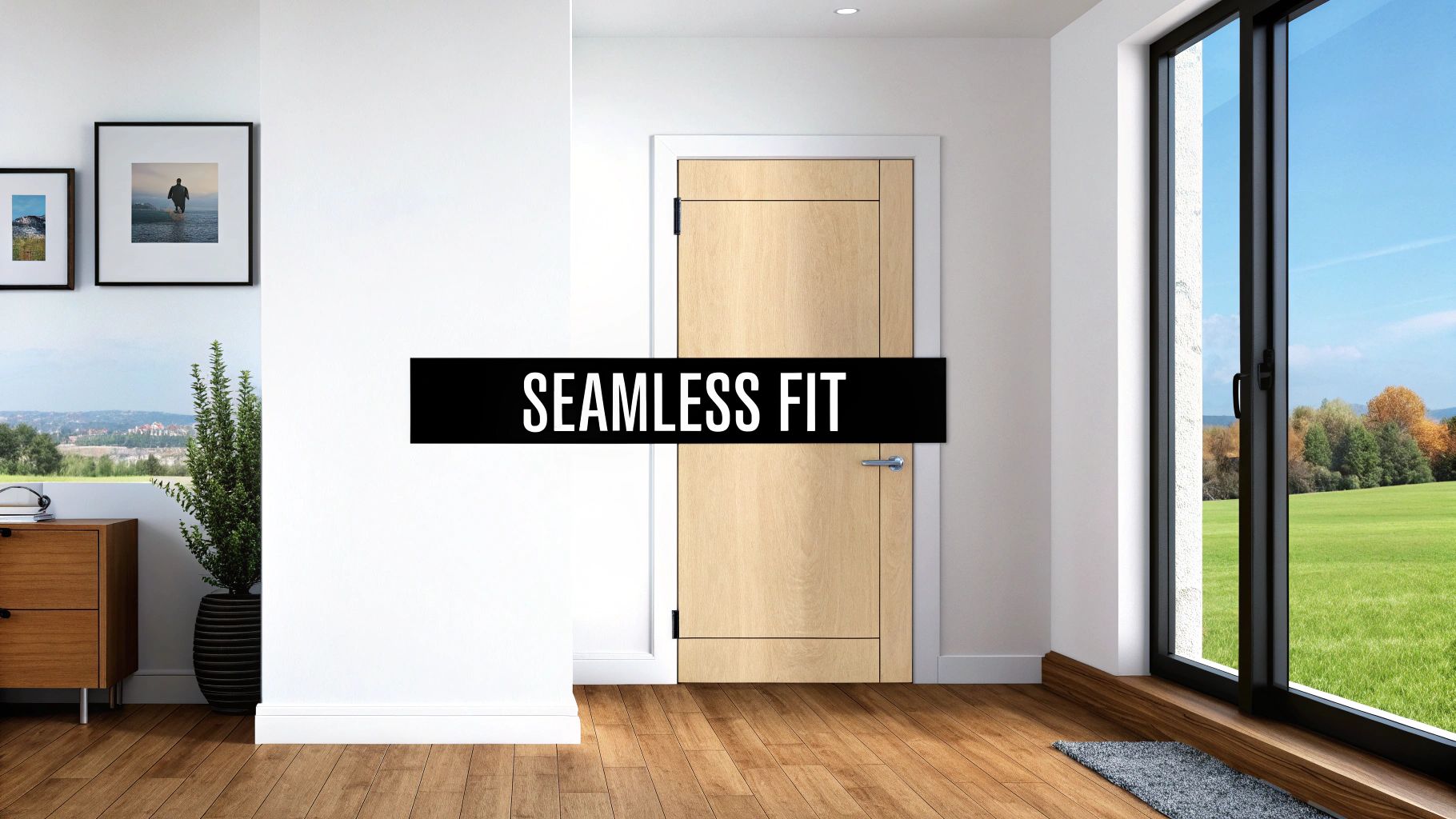
It’s easy to get lost in the technical details, but the real magic of a rebated door is what it actually does for your home. These aren’t just minor tweaks; we’re talking about tangible upgrades that improve your daily comfort, quiet, and security. That clever interlocking lip is the secret sauce behind it all.
The most immediate benefit you’ll notice is far better protection from the elements. A rebated door’s overlapping seal forms a seriously tough barrier against wind and rain. This means fewer draughts sneaking through the gaps, which keeps your living space warmer and cosier, especially during those harsh UK winters.
That same tight seal brings another huge plus: a quieter home.
Enhanced Insulation and Security
The interlocking design is brilliant at muffling sound. Whether it’s dampening the noise from a busy street or just giving you better acoustic privacy between the lounge and a home office, a rebated door makes a noticeable difference. The overlapping material helps to deaden sound vibrations much more effectively than a standard flush door.
This overlapping method is particularly effective at reducing drafts and noise transfer, which has led to rebated doors being favored in residential properties requiring enhanced thermal efficiency and acoustic privacy.
On top of that, this design inherently boosts security. The overlapping lip reinforces the door’s edge, making it much harder for someone to pry it open. This extra resistance gives you valuable peace of mind, turning your door into a much tougher obstacle against forced entry. Rebated doors interlock with the door frame or the adjacent door leaf in a pair, creating a far tighter seal than you’d get with flush or non-rebated doors.
Finally, you can’t ignore the aesthetics. For rebated door pairs, like the kind used for French doors, the design lets them close perfectly flush without needing a clunky central mullion or leaving an ugly gap. The result is a clean, seamless, and elegant finish that elevates any room.
Rebated Doors vs. Standard Doors: A Clear Comparison
When you’re choosing a new door, one of the first decisions you’ll often face is whether to go for a rebated or a standard, non-rebated design. At a glance, they might seem to do the same job, but how they seal, the hardware they use, and the way they fit into the frame are fundamentally different. This makes them suited for very different jobs around the home.
A standard door is what most people picture: a simple slab with flat edges that sits flush against the doorstop inside the frame. When it’s closed, you’ll see a small, even gap all the way around. It’s straightforward and does the job perfectly well for most internal uses.
In contrast, a rebated door has an overlapping lip—a small groove or step cut into the edge—that interlocks with the frame or its partner in a pair of doors. This single design feature is what sets it apart. It creates a much tighter, more robust seal that’s fantastic at blocking draughts, muffling sound, and boosting thermal insulation. This is what makes it a specialist choice when performance really matters.
To give you a better idea of how this works in practice, here’s a look at the different types of rebates you might come across.
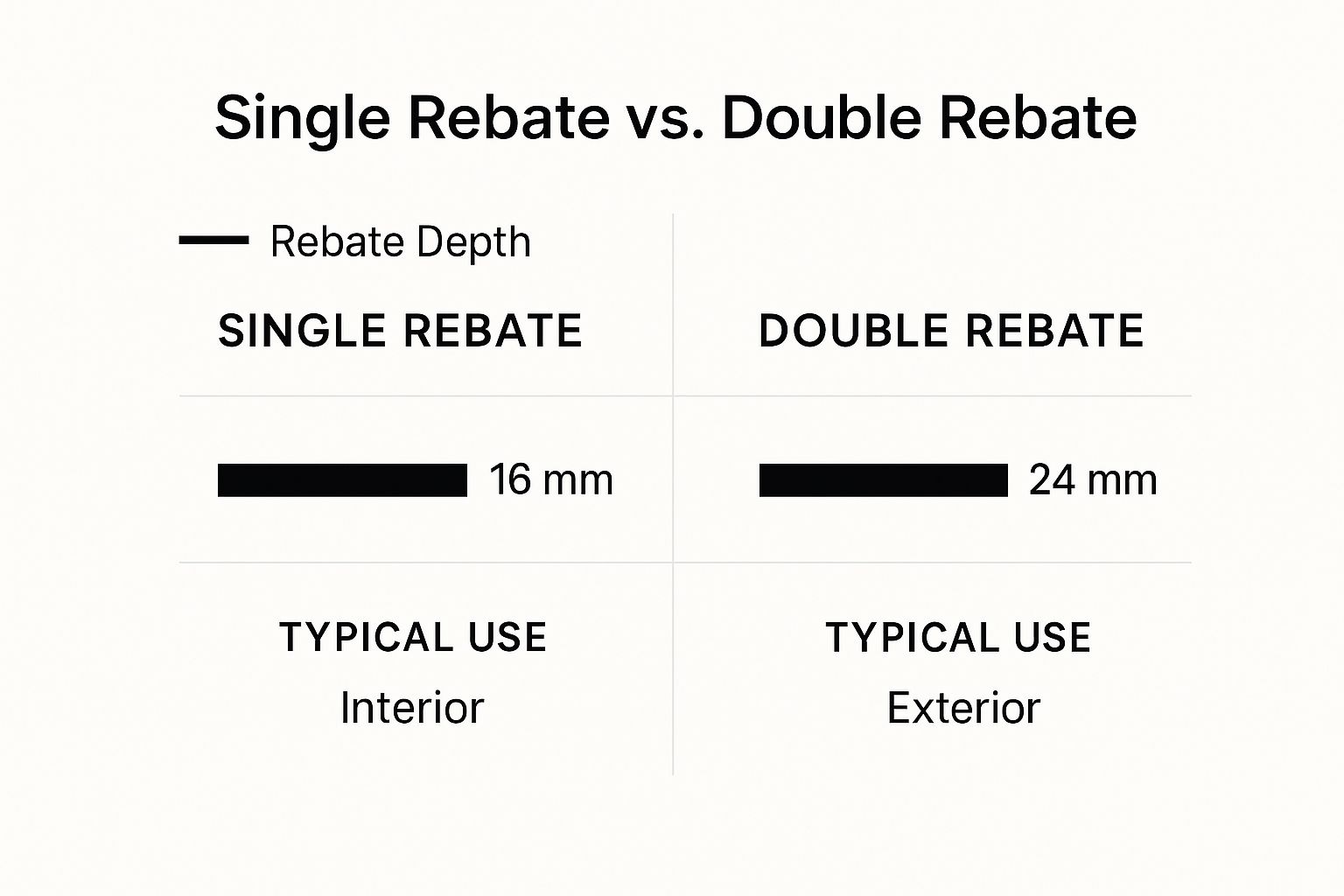
As you can see, the deeper, double rebate is usually kept for external doors, where you need the absolute best protection against the British weather.
Key Functional Distinctions
So, what’s the catch? Well, the extra performance you get from a rebated door comes with a trade-off during installation. Standard doors are pretty forgiving; you can usually hang them on either side of the frame with universal hardware. A rebated door, on the other hand, demands a bit more planning.
Because of its overlapping design, a rebated door needs specific rebated hinges and locks that are designed to accommodate the offset lip. More importantly, the ‘handing’—whether the door opens to the left or right—must be decided before you buy, as it’s fixed and can’t be changed on-site.
To make things even clearer, let’s break down the key differences in a simple table. This should help you weigh up what’s most important for your project.
Rebated vs. Non-Rebated (Standard) Doors
| Aspect | Rebated Door | Non-Rebated (Standard) Door |
|---|---|---|
| Seal | Superior; the overlapping lip effectively blocks draughts and noise. | Basic; a visible gap remains around the door edge. |
| Hardware | Requires specific rebated hinges and latches to fit the design. | Uses standard, widely available door hardware. |
| Best Use | External doors and internal pairs where a flush finish is needed. | General internal use where basic function is all that’s required. |
| Installation | Less forgiving; needs precise handing (left/right) and careful fitting. | More flexible and much easier for a straightforward DIY installation. |
Ultimately, the choice between them really boils down to your priorities. If you’re after top-notch insulation, better soundproofing, and a seamless, high-end look (especially for double doors), the rebated door is the undisputed winner. But for simplicity, versatility, and most internal applications, a standard door is often more than enough.
Where Rebated Doors Make the Most Impact
So, we’ve covered the what and the why. Now, let’s get down to the practical side of things: where do rebated doors really pull their weight in a home? From my experience, they aren’t just a stylistic choice; they’re specialists, solving common headaches with draughts, noise, and awkward designs in two key areas of UK homes.
This is where you see this door style go from a good idea to the best solution available.
Unbeatable for External Doors
First and foremost, think about your external doors. Your front door, back door, or patio doors are on the front line, constantly battling the famously unpredictable British weather. This is where a rebated door truly excels.
The clever overlapping seal creates a formidable barrier against wind-driven rain and those nagging draughts that seem to find their way through anything. A standard door just can’t compete on this front.
This superior weatherproofing translates directly into a warmer, drier home. It also means you’re not haemorrhaging heat, which can make a noticeable difference to your energy bills. Plus, that robust, interlocking design offers a natural security boost, making the door much tougher to force open.
Perfect for Internal Door Pairs
The second place these doors shine is with internal door pairs—think of classic French doors leading from a lounge to a dining room or conservatory. Their design is precisely what makes that elegant, seamless look possible.
Without a rebate, you’re left with two options for double doors: either live with a visible gap between them when closed, or install a clunky fixed post (a mullion) for them to close against. Rebated pairs get rid of this problem entirely, giving you a completely clear, unobstructed walkway when both doors are open.
This creates a much more graceful, open-plan feel. When you shut them, the interlocking lips meet perfectly flush for a clean, high-end finish that just looks right. These pairs use a smart primary and secondary door system, where a small section of the lip on each door is removed so they can lock together snugly—a feature that also makes them fantastic for external use. For a deeper dive into how this works.
In short, if your project demands maximum protection from the elements or an elegant, unobstructed opening for an interior pair, a rebated door is almost certainly the solution you’re looking for.
Understanding Installation and Hardware Needs
Putting a rebated door in place isn’t quite the same as hanging a standard, non-rebated one. The real difference comes down to the specialist hardware and the precise fitting needed for the door’s signature overlapping lip. If you don’t get these details spot on, you lose the high-performance seal the door was designed for.
For starters, a standard hinge just won’t cut it. Because the rebated edge creates an offset, you have to use purpose-built rebated hinges. These have a specific cranked shape designed to sit perfectly in the groove, letting the door close flush and swing freely without catching on the frame.
It’s the same story with the latch and lock. You’ll need a rebated latch kit to make sure the bolt lines up exactly with the keep on the door frame. Without it, the door simply won’t close securely.
Getting the Handing Right
One of the most crucial steps, especially when you’re ordering a pair of rebated doors, is figuring out the correct ‘handing’. This simply means which way the door will open and which of the two doors will be the main, or ‘leading’, one. Unlike standard doors that can often just be flipped over, a rebated door’s handing is fixed from the get-go.
A common and costly mistake is getting the handing wrong. If you do, the door just won’t fit, period. For door pairs, you have to decide which door you’ll open first, as this dictates whether you need a left-hand or right-hand leading set.
While a confident DIYer might feel up to installing a single rebated door, fitting a pair is a job I’d usually recommend leaving to a professional joiner. Their experience is invaluable for achieving a perfect fit, silky-smooth operation, and a finish that looks flawless. That overlapping design doesn’t just create a better seal; it also makes the door more secure by making it harder to force open. If you’re interested in that extra peace of mind.
Your Questions About Rebated Doors Answered
Even after getting to grips with what a rebated door is, it’s natural to have a few lingering questions. Let’s walk through some of the most common queries I hear from homeowners, giving you clear, straightforward answers to help you feel confident in your choice.
Can I Get a Standard Door Rebated After I’ve Bought It?
The short answer is, it’s not a good idea. Creating a rebate isn’t just a simple trim; it’s a precision woodworking job that removes a specific chunk of the door’s edge. Trying to do this after the fact can seriously weaken the door’s structure and almost always results in a poor, gappy fit. It’s always best to buy a door that was designed and built as a rebated door right from the factory.
Do I Really Need Special Hinges?
Yes, this one is non-negotiable. Because of that clever overlapping lip, a standard hinge just won’t work—the door won’t hang correctly or close properly. You absolutely must use specialised rebated hinges. These are designed to handle the offset, ensuring the door swings smoothly and shuts snugly without catching on the frame.
A common question revolves around door thickness. Rebated doors are often thicker than the standard 35mm found in UK homes to enhance their insulating properties and ensure a perfectly flush fit with the frame. You can learn more about typical door specifications on doorsonlineuk.co.uk.
Are Rebated Doors a Lot More Expensive?
They do typically carry a slightly higher price tag. Both the doors themselves and the required hardware usually cost a bit more than standard options, simply because the manufacturing is more complex and the components are specialised. However, most people find the extra investment is easily justified by the long-term pay-offs in energy savings, noise reduction, and better security.
How Do I Know if I Need a Left or Right-Handed Door Pair?
This is what we call ‘handing’, and getting it right is crucial for door pairs. It’s actually quite simple to figure out. Stand on the side of the opening where the doors will swing towards you. The door you would naturally open first is called the ‘leading’ or ‘master’ door. If that door’s hinges are on the right, you need a right-handed pair. If they’re on the left, you’ll need a left-handed set.
At Doors Delivered, we simplify the process of finding the perfect high-quality doors for your project. Explore our extensive collection of internal doors and accessories, from modern flush designs to timeless classics, all available with nationwide delivery. Discover your ideal solution at https://doorsdelivered8675.live-website.com.